Granada organises its discoveries around three complementary poles that can be covered in three to four days.
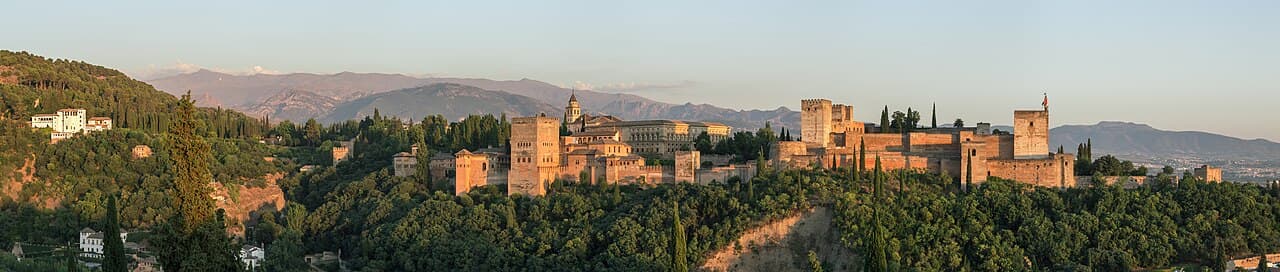
The Alhambra (from the Arabic al-Hamra, 'the red one') is the non-negotiable centrepiece and one of humanity's architectural wonders. The complex divides into three distinct zones: the Nasrid Palaces (Mexuar, Comares, Palace of the Lions) — the heart of the site, limited to strict timed entry — the most perfect examples of medieval Islamic art with their muqarnas (stucco stalactites), carved arabesques and water-mirror courtyards. The Alcazaba fortress, the oldest part of the complex, is a labyrinth of towers and ramparts offering the finest panoramic views over Granada and the vega. The Generalife gardens, the summer palace of the Nasrid sultans, deploy their water channels, cypress alleys and rose terraces in a water-garden art form without equal in the Western world.
The Albaicín is Granada's second treasure — a Mediterranean quarter of remarkable coherence, whose white lanes, walled courtyard houses (cármenes) and converted mosques compose a living testament to Mozarab Andalusia. The walk up from Plaza Nueva on foot (30 minutes) follows the Carrera del Darro, a riverside path that offers a unique low-angle view of the Alhambra above. The Mirador San Nicolás (Albaicín summit) is the most spectacular viewpoint of the Alhambra — the sunset from this mirador, with the fortress glowing red and the Sierra Nevada igniting behind it, is one of the most unforgettable images in Andalusia.
The Sacromonte is Granada's third dimension — the most mysterious and least touristy of the three historic quarters. This troglodyte Gypsy quarter, carved into the limestone hill facing the Alhambra, houses the caves of the zambra artists — a form of Gypsy flamenco that is more improvised, more visceral and more historically layered than the performance flamenco of Seville's stages. An evening of zambra in one of the historic caves (Cueva de la Rocío, Zambra María La Canastera) is the most intense nocturnal experience Granada offers.
In the historic centre, the Cathedral of the Incarnation (sixteenth century, Renaissance style) and the Royal Chapel (Capilla Real, adjacent) merit a morning. The Royal Chapel houses the tombs of Ferdinand and Isabella (the Catholic Monarchs who captured Granada from the Moors in 1492) and a remarkable collection of Flemish paintings. The Corral del Carbón (fourteenth century, the only surviving Nasrid caravanserai) and the El Bañuelo Arab Baths (eleventh century, the oldest on the Iberian peninsula) complete the centre visit.
The Sierra Nevada deserves at least a half-day, whether for summer hiking (trails reach the summit of Mulhacén at 3,479 m) or winter skiing (December-April, 125 km of runs). The Pradollano viewpoint (2,100 m), 45 minutes by road from the centre, offers an extraordinary panorama over the entire Andalusian Mediterranean coast.
Read also
- Andalusia — Seville, Córdoba, Málaga, Ronda and the Pueblos Blancos — all of southern Spain.
- Seville — Cathedral, Alcázar, Plaza de España, flamenco and the April Fair.
- Spain — Complete guide: entry requirements, budget, regions and the best time to visit.
- Marrakech — Medina, souks and palaces in the ochre city — the other great Moorish city of the Mediterranean.