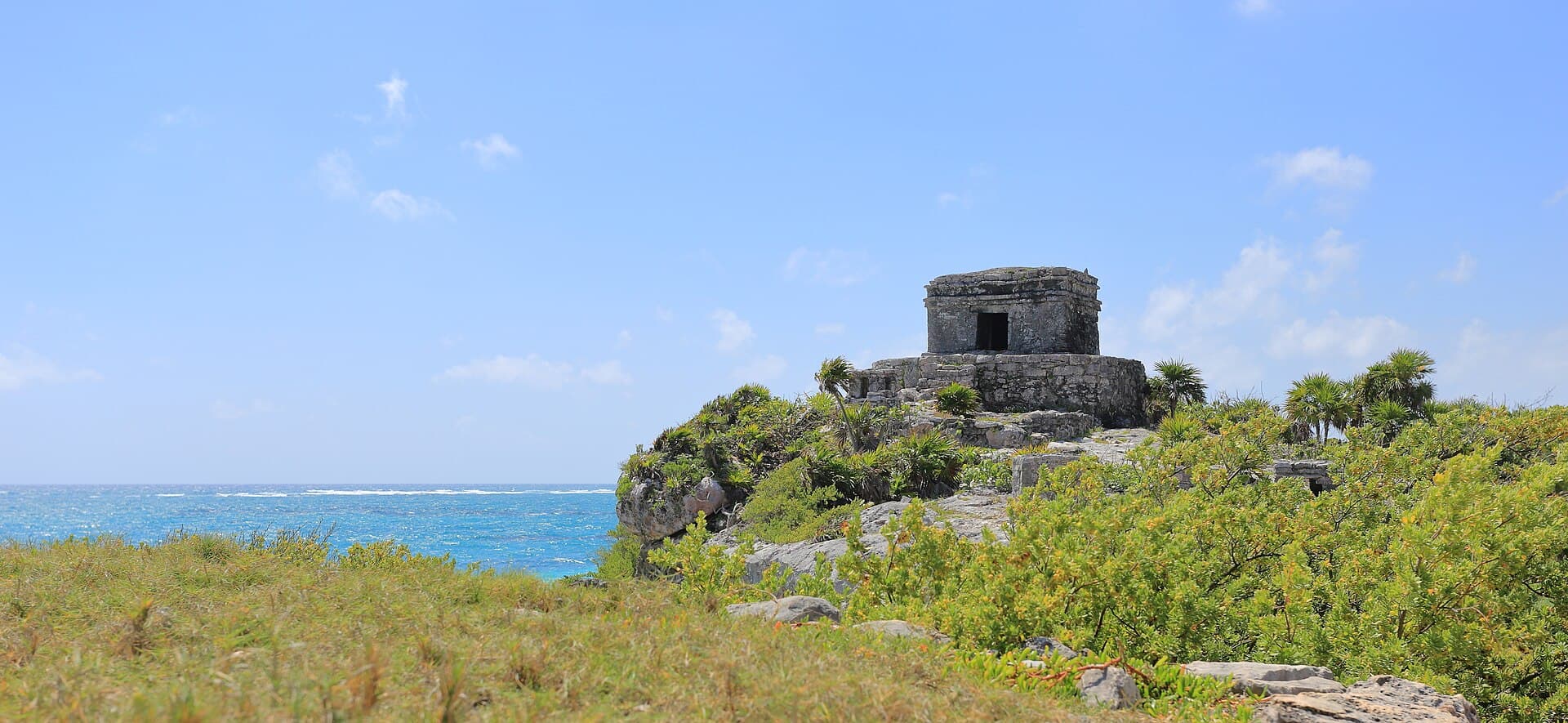
Tulum concentrates its attractions around three complementary anchors that link nicely into a well-organized few days.
The Maya ruins of Tulum are the best-situated Maya site in the entire peninsula: built between the 13th and 15th centuries, this former port city served as a lighthouse and trading hub for coastal Maya merchants. El Castillo, the main 7-meter-tall temple overlooking the cliff, frames a view across the turquoise sea that has become one of the iconic images of Mexico. The Templo del Dios del Viento and the Casa de las Columnas complete the ensemble. Arrive at opening (8 a.m.) or in late afternoon to beat the crowds and catch the best light. Entry costs 95 pesos (€5); the optional shuttle train from the parking lot is 50 pesos.
The cenotes are the second great draw. Within 30 km, around fifteen quality cenotes are accessible from Tulum pueblo. The Gran Cenote (5 km) is the most visited: crystalline water, tropical fish, bats sheltering under the stalactites, and a well-designed snorkeling platform — arrive before 9 a.m. to have it almost to yourself. Dos Ojos (15 km) is a system of two cenotes linked by underwater galleries — the Bat Cave is spectacular even just snorkeling on the surface. The Cenote Calavera (Tulum Pueblo, 2 km) impresses with its three entry holes (including a five-meter jump for the bold) leading into a luminous underground chamber. For full cavern diving in the Quintana Roo systems (Sistema Sac Actun), several certified shops in Tulum run guided dives.
The Tulum beach stretches more than 10 km between the ruins and the Sian Ka'an Biosphere. The most beautiful section runs along the hotel zone: powdery white sand, leaning palms, turquoise water — and the palapa boutique hotels that made Tulum's reputation. The public section at the foot of the ruins is the most dramatic but also the most crowded. For beach access without hotel fees, head to the public parking lot at the southern end of the hotel zone. Beyond on-beach snorkeling, water activities include kitesurfing along the Sian Ka'an side (steady winds from November to April), paddleboarding, and boat trips to the Akumal reef or Cozumel.
Read also
- Mérida, the colonial capital of the Yucatán — Four hours away by road: the white city, the ideal base for Chichén Itzá and Uxmal.
- The Yucatán Peninsula — Complete regional guide: sites, cenotes, logistics and best months.
- Mexico travel guide — Everything you need to know before you go: visa, budget, safety and best regions.