
Expert on Mexico · 1 contributions
 Africa & Americas Desk — Mowando·Editor
- · Travellers curious about pre-Hispanic culture and world-class food
- · Couples or friend groups outside Mexican school holidays
- · Explorers who want to mix colonial cities with Caribbean beaches
November, December, January, February, March, April
The winning formula at 15 days: 3 nights Mexico City, 4 nights Oaxaca, 3 nights Mérida, 3 nights Tulum. One rule: skip the rental car in Mexico City (traffic is a nightmare), but pick one up in Mérida for the Maya sites.
Day by day
- 1Day 1
Arrival in Mexico City — settling in and first dinner in the Centro
Land at Benito Juárez International Airport (MEX), Terminal 1 or 2 depending on your airline. Authorised taxi from the official SITME counter inside arrivals: budget 200-300 MXN (€10-15) depending on your neighbourhood — always avoid the unofficial drivers who approach outside the doors.
Best neighbourhoods to stay: Roma Norte, Condesa or Polanco — reasonable prices, decent safety, restaurants and cafés within walking distance. Centro Histórico is spectacular but less practical in the evening. Once settled, take a walk along Avenida Álvaro Obregón or Calle Amsterdam (Condesa) to feel the city's pulse.
First dinner at El Cardenal (Palma 23, Centro Histórico): a historic cantina since 1969, specialising in traditional Mexico City cooking — chile en nogada, mole negro, tamales, café de olla. Budget 350-500 MXN (€17-25) per person including drinks.
Tips- · Metrobús Line 4 connects the airport to the Centro for just 6 MXN (€0.30) — but with heavy luggage, the official taxi makes more sense.
- · Avoid using your phone visibly on the street for the first few hours: get your bearings first. Local Telcel SIM available at the airport, ~200 MXN (€10) for 15 days of data.
- 2Day 2
Mexico City — Zócalo, Templo Mayor and historic cantinas
Full day in the Centro Histórico, a UNESCO World Heritage Site. Start at 9am at the Zócalo (Plaza de la Constitución), the world's second-largest square after Red Square — free and open 24/7. At the north-east corner: Templo Mayor, the Aztec temple discovered in 1978 beneath a Mexico City apartment block. Museum + excavations: 80 MXN (€4), open 9am-5pm.
Lunch at Mercado de San Juan (Ernesto Pugibet 21): a covered market with stalls of Mexican cheeses, charcuterie and tropical fruit — assemble a meal for 80-120 MXN (€4-6). Afternoon: the Palacio de Bellas Artes (remarkable Art Deco façade, free entry to ground floor) and Alameda Central.
End-of-day aperitivo at a cantina: try Cantina La Mascota (Mesones 20, Centro) or La Ópera (5 de Mayo 10) — Art Nouveau woodwork, artisan mezcal for 80-100 MXN (€4-5) a glass, atmosphere unchanged since the 1920s.
Tips- · Templo Mayor is closed Mondays — if Day 2 falls on a Monday, swap to the Casa de los Azulejos instead.
- · Historic cantinas serve free botanas (snacks) with every drink order — a tradition unchanged since the 1940s.
- 3Day 3
Coyoacán, Frida Kahlo and Teotihuacán day trip
Morning in the bohemian neighbourhood of Coyoacán: municipal market (Ignacio Allende), coffee at Café El Jarocho (open since 1953, café de olla for 20 MXN), then Museo Frida Kahlo (La Casa Azul, Londres 247) — online reservation mandatory, 270 MXN (€13), slots sold out 3-4 weeks ahead in high season.
Afternoon: day trip to Teotihuacán (50 km north of Mexico City, 1h by bus from Terminal del Norte — ADO or Autobuses México-Teotihuacán, 82 MXN one way, €4). Site open 9am-5pm, entry 80 MXN (€4). Pyramid of the Sun (65m, 248 steps), Pyramid of the Moon, Avenue of the Dead. Avoid July-August 11am-2pm: crushing heat and crowds — aim for a 2:30pm entry on a weekday.
Return to Mexico City around 6:30pm on the same bus. Dinner in Roma Norte: Pujol (Tennyson 133, Polanco) for the Mexican gastronomy tasting menu (3,000 MXN / €145 per person, book 2-3 months ahead) or the affordable option at Contramar (Durango 200, Roma Norte, ~400 MXN / €20, fresh fish, walk-in recommended).
Tips- · Casa Azul (Frida Kahlo museum) limits entry to 90 people per slot — book as early as possible; weekend slots sell out within 48 hours.
- · At Teotihuacán, vendors sell obsidian and replica artefacts: haggling is expected, budget 100-250 MXN (€5-12) for a decent souvenir.
- 4Day 4
Mexico City → Oaxaca flight — settling into the Centro
Domestic flight Mexico City (MEX) → Oaxaca (OAX): Aeromexico or Volaris, 1h flight time, fares 800-1,800 MXN (€40-90) depending on advance purchase. Oaxaca airport is 7 km from the city centre, official taxi: 100-130 MXN (€5-6).
Arrive in the morning or early afternoon depending on your chosen flight (frequent departures 7-10am from MEX). Drop bags at the hotel, then take a first walk around Oaxaca's Centro Histórico: Plaza de la Constitución, Iglesia de Santo Domingo de Guzmán (striking baroque façade, free entry), adjacent Jardín Etnobotánico (guided tours only, 50 MXN / €2.50).
Opening dinner at Restaurante Los Danzantes (Macedonio Alcalá 403): refined Oaxacan cuisine, house-made mole negro, tlayudas with quesillo cheese, artisan mezcal. Budget 400-600 MXN (€20-30) per person.
Tips- · Book the MEX → OAX flight 4-6 weeks in advance to find fares under 1,200 MXN (€60) — last-minute prices climb to 2,500-3,500 MXN.
- · Recommended hotels in Oaxaca Centro: Casa Antonieta or Hotel Azul de Oaxaca — rooms around 800-1,200 MXN (€40-60) per night in shoulder season.
- 5Day 5
Oaxaca — markets, mole and mezcalerías
Morning at Oaxaca's two essential markets: Mercado Benito Juárez (20 de Noviembre 801) for herbs, spices, chapulines (roasted grasshoppers, 30-50 MXN / €1.50-2.50) and textiles; Mercado 20 de Noviembre directly across for tlayuda cooks, grasshopper grills and caldo de pollo. Lunch on-site: a full tlayuda (giant tortilla, frijoles, quesillo, meat) for 80-120 MXN (€4-6).
Afternoon dedicated to artisan mezcal: Oaxaca produces 85% of Mexico's mezcal. Visit mezcalería In Situ (Flores Magón 209) — 400-label cellar, 3-mezcal tasting for 150 MXN (€7.50), knowledgeable staff. Then stroll down the pedestrian street Macedonio Alcalá (artisans, galleries, Zapotec textile shops).
Dinner at Mercado de Tlacolula if it's Sunday (weekly regional market, 45 min by bus) or otherwise at Casa de los Sabores (Libres 205): cooking class followed by the meal, reservation recommended.
Tips- · Don't confuse mezcal with tequila: mezcal can be made from 50+ agave varieties, versus just one (blue agave) for tequila. Artisan mezcales cost 200-600 MXN (€10-30) a bottle in-store.
- · Mercado Benito Juárez opens at 7am — arrive early to see the set-up and beat the midday heat (Oaxaca sits at 1,550m elevation, pleasant temperatures but intense sun).
- 6Day 6
Monte Albán and Zapotec villages
Monte Albán: the major Zapotec archaeological site, UNESCO-listed, founded around 500 BC, 9 km west of Oaxaca. Collectivo from the Artesanías market (30 MXN / €1.50, departures every hour), or half-day guided tour from the city (200-300 MXN / €10-15). Entry: 80 MXN (€4), open 8am-5pm.
Allow 2.5-3h on-site: central Grand Plaza, North and South temples, Observatory (arrow-shaped building), tombs excavated in the 20th century. Panoramic view over the Valley of Oaxaca from the top of the main platform.
Return in the early afternoon. Visit Teotitlán del Valle (30 min from Oaxaca, collectivo 25 MXN): a Zapotec village specialising in hand-woven wool rugs — each family has its own style and natural dyes. Buy direct from the artisan, 300-800 MXN (€15-40) depending on size. Dinner back in the city: Pitiona Cocina de Autor (Cinco de Mayo 311) — refined new Mexican cuisine.
Tips- · Monte Albán is fully exposed to the sun all day with no shade: hat, sunscreen and at least 1.5 litres of water are non-negotiable.
- · Collectivos in Mexico are minibuses or shared taxis — pay on arrival, the fare is fixed. If the driver asks for more, it's negotiable. Always confirm the price before getting in.
- 7Day 7
Hierve el Agua and last evening in Oaxaca
Hierve el Agua: petrified waterfalls 70 km from Oaxaca, at 1,800m altitude. Two mineral formations shaped like frozen cascades (Cascada Chica and Grande), natural pools with a dizzying view over the gorges. Access: organised tour from Oaxaca (200-300 MXN / €10-15 including transport and guide), or rent a car with GPS. Entry: 25 MXN (€1.25), open 8am-6pm.
Allow 3h: 1h30 drive each way, 45-min walk on-site, swimming possible in the natural pools (bring a swimsuit). En route, optional stop at San Bartolo Coyotepec (Zapotec black pottery, a unique glossy-black craft found nowhere else in the world, buy direct from the potters).
Last evening in Oaxaca: mezcal aperitivo at Bar Sabina (Cinco de Mayo 209, rooftop terrace), then relaxed dinner at the Mercado de la Ciudad open until 9pm. Pack your bags — early departure to the airport tomorrow.
Tips- · The road to Hierve el Agua crosses passes at 2,000m — in rainy season (May-October), some sections can be muddy. Check conditions if renting a car.
- · The natural pools at Hierve el Agua contain sulphurous water: don't submerge your head, avoid eye contact. Pack a towel in your daypack.
- 8Day 8
Oaxaca → Mérida flight (via Mexico City) — settling into Barrio de Santa Ana
Flight Oaxaca (OAX) → Mexico City (MEX) → Mérida (MID): no direct Oaxaca-Mérida flights as a rule. Connecting through Mexico City, total journey 4-5h depending on schedule (OAX-MEX: 1h, layover 1.5-2h, MEX-MID: 1.5h). Airlines: Aeromexico, Volaris or VivaAerobus. Fare: 1,200-2,500 MXN (€60-125) depending on advance purchase.
Arrive at Mérida International Airport in the early afternoon. Official taxi to the centre: 150-200 MXN (€7.50-10). Mérida is the capital of the Yucatán, nicknamed 'La Ciudad Blanca' for its immaculate limestone façades. Recommended neighbourhood: Santiago or Santa Lucía — colonial, quiet, restaurants within walking distance.
First stroll along Paseo de Montejo (Yucatán's Haussmann-style boulevard, Belle Époque villas). Light dinner at Mercado Lucas de Gálvez (calle 56, closed evenings) or on the terrace at La Chaya Maya (calle 62 x 57): traditional Yucatecan cuisine — poc chuc, cochinita pibil, sopa de lima.
Tips- · Allow at least 2 hours for the Mexico City connection — Terminal 1 at MEX is large, and security can take 30-40 minutes.
- · In Mérida, heat is intense year-round (35-40°C June to September). November-March: 25-30°C by day, 18-22°C at night — the ideal months for this itinerary.
- 9Day 9
Mérida — colonial centre and Yucatán markets
Full day in the centre of Mérida. Morning on foot: Plaza Grande (zócalo) and Catedral San Ildefonso (1598, one of the oldest in the Americas, free entry), then the Museo Regional de Antropología (Palacio Cantón, Paseo de Montejo 485) — exceptional Maya collection, 60 MXN (€3), closed Mondays.
Lunch at Mercado de Santa Ana: authentic neighbourhood market, cochinita pibil on fresh tortillas for 30-50 MXN (€1.50-2.50), fresh fruit juices. Afternoon: visit the Museo de la Ciudad (calle 56 x 65, free entry) and stroll through the Santiago neighbourhood, one of the city's oldest.
Evening on Paseo de Montejo: free entertainment on weekends (marimba, danzón), lively terraces. Dinner at Hacienda Teya (12 km from centre, reservation recommended) or in town at Apoala (calle 60 x 55, contemporary Mexican cuisine, 300-450 MXN / €15-22).
Tips- · Mérida is known for its relative safety by Mexican standards: you can walk the centre in the evening without major concerns. Avoid peripheral neighbourhoods after 10pm.
- · Sunday in Mérida: Paseo de Montejo and Plaza Grande are closed to traffic and converted into a pedestrian and cycling promenade from 8am — the essential local experience.
- 10Day 10
Uxmal day trip and cenotes of the Puuc Route
Uxmal: classic Maya site 80 km south of Mérida, among the Yucatán's finest — UNESCO-listed since 1996. Distinctive Puuc architecture: geometric mosaics, bicephalous serpent, Pyramid of the Magician (35m height, uniquely elliptical base in Mexico). Renting a car recommended for this day (300-450 MXN / €15-22 per day), or join a group excursion from Mérida (350-500 MXN / €17-25).
Uxmal entry: 533 MXN (€26) (includes federal and Yucatán state fees). Hours 8am-5pm. Allow 2.5h on-site. On the return route: Puuc Route with a stop at Kabah (monumental Arch, 70 MXN / €3.50) and nearby cenotes — Cenote Samulá or Dzitnup (50-80 MXN / €2.50-4 entry), turquoise underground waters lit by a natural skylight.
Back in Mérida by late afternoon. Dinner in town, free evening.
Tips- · The Puuc Route concentrates five Maya sites within 30 km — a combined 'Ruta Puuc' ticket (including Uxmal, Kabah, Sayil, Xlapak, Labná) is available some Sundays for an extra 150 MXN.
- · Cenotes Dzitnup and Samulá are 2 km from Valladolid but also accessible on day trips from Mérida. Swimming in modest clothing is suggested by the Maya communities that own the site.
- 11Day 11
Chichén Itzá day trip and Valladolid
Chichén Itzá: one of the Seven New Wonders of the World, 120 km east of Mérida. Early departure — no later than 7:30am — by rental car or group excursion. An 8am opening arrival is critical: tourist coaches arrive from 10:30am onward and the site becomes dangerously crowded. Entry: 617 MXN (€30) (federal + state).
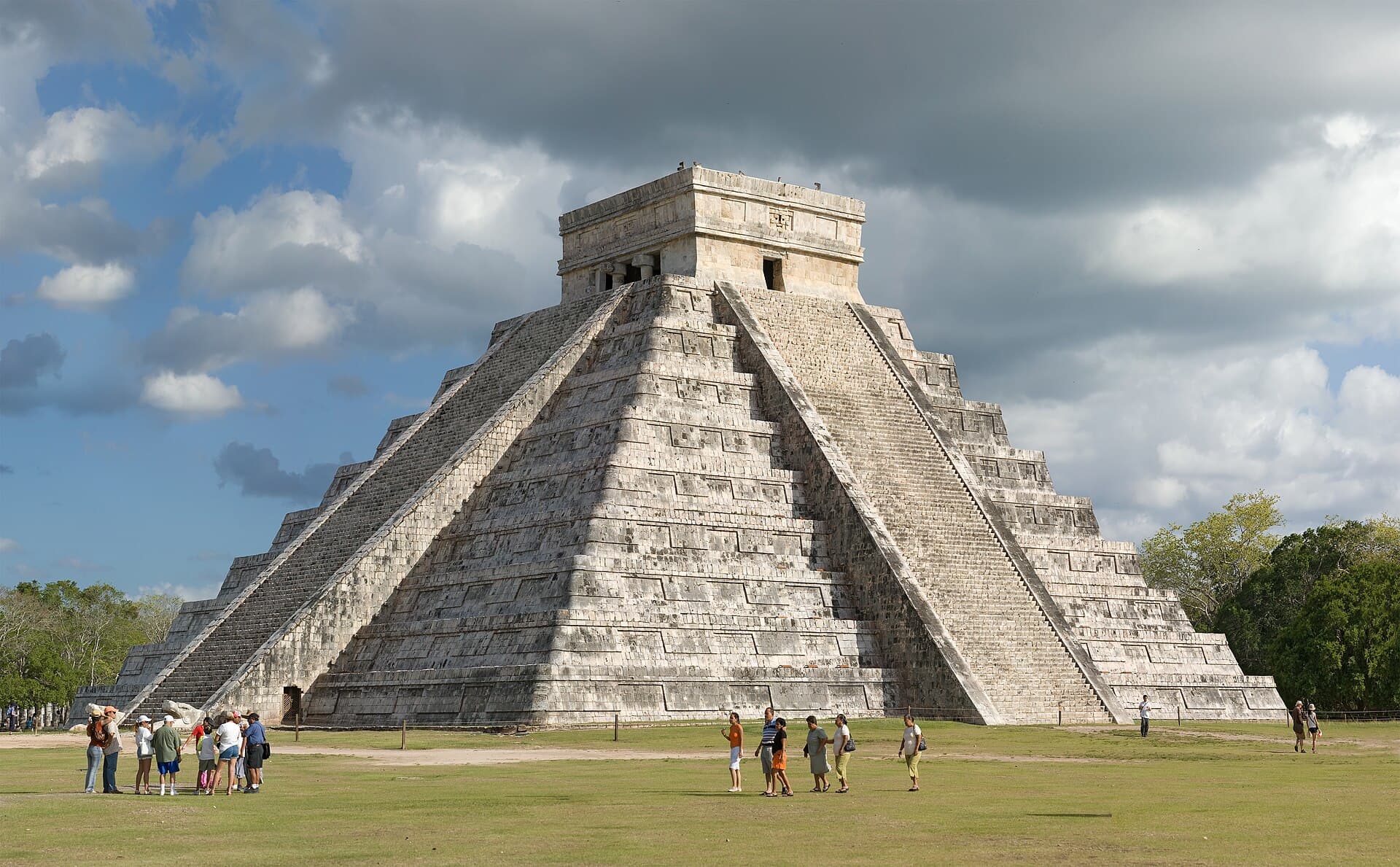
Key sites: Pyramid El Castillo (Kukulcán, 24m — climbing banned since 2006), ball court (the largest in Mesoamerica), Temple of the Warriors, Sacred Cenote. The acoustic effect in the ball court — a single handclap produces a 7-second echo — is worth testing. Allow 3h.
Lunch in Valladolid (45 min from Chichén Itzá): a charming Yucatecan colonial town, far less crowded than Mérida. Cenote Zaci right in the city centre (30 MXN / €1.50, swimming allowed). Restaurant El Mesón del Marqués for the house cochinita pibil. Return to Mérida by early evening.
Tips- · Chichén Itzá is one of Mexico's most photographed sites — and one of the most commercialised. Dozens of vendors line the paths: hold firm on prices or simply keep walking.
- · Spring equinox (March 21) and autumn equinox (September 21) draw 10,000 people for the light effect on El Castillo — avoid those dates unless that's the primary goal of the trip.
- 12Day 12
Mérida → Tulum by car — road trip and Cobá
Drive from Mérida to Tulum: around 310 km, 3h by road on the cuota (toll motorway, ~200 MXN / €10). No-car alternative: ADO bus direct Mérida-Tulum, departures 7:30am or 10:30am, 3h45, 322 MXN (€16) — comfortable, air-conditioned, on time.
Road stop at Cobá: a Maya city in the jungle, 1h30 from Tulum. Less famous than Chichén Itzá but more authentic — the only pyramid in Mexico you can still climb (Nohoch Mul, 42m, 120 steps). Entry: 80 MXN (€4). Bike rental on-site to navigate between monument groups (50 MXN / €2.50). Allow 1.5-2h.
Arrive in Tulum by late afternoon. Neighbourhoods: Tulum Pueblo (the village, cheaper, more local) or Tulum Playa / Zona Hotelera (beachfront, prices +50%). First drinks facing the sea, light dinner in the pueblo.
Tips- · Tulum's Zona Hotelera is only accessible by car or bike — if you returned your car in Mérida, rent one in Tulum (200-350 MXN / €10-17 per day) or rely on cycling.
- · ADO is Mexico's most reliable bus company: punctual, strong air conditioning, hold luggage included. Book online at ado.com.mx — same price as the counter, no queue.
- 13Day 13
Tulum — Maya ruins and Caribbean beaches
Morning at the Tulum ruins: a fortified 13th-century Maya city perched on a 12m cliff overlooking the Caribbean — one of the most spectacular panoramas in Mexico. Entry: 80 MXN (€4), open 8am-5pm. Arrive at 8am to beat the groups — the site becomes saturated after 10am. A small beach at the base of the ruins is accessible from inside the site.
Afternoon on the Zona Hotelera beaches: Playa Paraíso, Playa Ruinas (free access), or boutique hotels with paid access (100-200 MXN / €5-10) that include sunloungers and service. Shallow turquoise water, fine white sand — genuinely postcard material.
Evening in Tulum Pueblo: main street Avenida Tulum, taquerías lined up, relaxed vibe. El Camello Jr. (ceviche and seafood, 80-150 MXN / €4-7.50) or Taquería Honorio for tacos al pastor at 25 MXN each (€1.25).
Tips- · The Tulum ruins are fully exposed and the heat can be stifling — hat, sunscreen and water are non-negotiable. Entry is free for children under 3.
- · Tulum's Zona Hotelera has suffered from sargassum seaweed in recent years (mainly May-September): check beach reports before booking a beachfront hotel (sargazo.mx).
- 14Day 14
Cenotes and Sian Ka'an Biosphere Reserve
Morning in the cenotes around Tulum: Gran Cenote (60 MXN / €3, 2 km from the ruins, crystal-clear water, stalactites, freshwater turtles visible), Cenote Calavera (30 MXN / €1.50, less crowded), Dos Ojos (220 MXN / €11, 82 km underground network, diving possible). Bring or rent a mask and snorkel on-site — 50-80 MXN (€2.50-4).
Afternoon: excursion into the Sian Ka'an Biosphere Reserve — a UNESCO reserve of 530,000 ha, Mexico's largest, 15 km south of Tulum. Boat tour from the pueblo (350-500 MXN / €17-25 per person, 3h), lancha passages between lagoons, spotting flamingos, manatees and crocodiles. Alternative: self-guided drive if you want to stop at the deserted beaches of Boca Paila.
Last dinner in Tulum: Hartwood (Carretera Tulum-Boca Paila, open-fire cooking, notoriously hard to book — arrive at 5pm for the waiting list, budget 500-800 MXN / €25-40) or Arca for the more accessible version.
Tips- · Cenotes are colder than expected (a constant 24-26°C) — don't underestimate the thermal effect after an hour in the water. Bring a lightweight UV-protective top for extended swimming.
- · Sian Ka'an Reserve bans chemical sunscreens to protect the fragile ecosystem: use only mineral sunscreens (zinc oxide or titanium dioxide, non-nano).
- 15Day 15
Tulum → Cancún → departure
Last morning in Tulum: early wake-up for a final swim before sunrise on the Zona Hotelera beach (one of the rare chances to see the coast to yourself). Return to the pueblo for breakfast — Matcha Café (Avenida Tulum, açaí, smoothies, relaxed vibe) or a taquería for a last round of tacos.
Transfer Tulum → Cancún Airport (CUN): 130 km, 1h45-2h depending on route. Options: shared taxi (200-300 MXN / €10-15 per person, departures from the pueblo), ADO bus direct Tulum → Cancún Airport (204 MXN / €10, 2h30), or rental car if not yet returned. Allow 3h before the flight — Cancún airport is enormous (Terminals 2, 3, 4), security long in high season.
Last purchases in duty-free: Yucatecan rum, Yucatán habanero sauce, Maya chocolate, vanilla de Papantla in a flask. Better prices: landside counters (Lucas de Gálvez market in Mérida) rather than at the airport.
Tips- · Cancún Airport is accessible from Tulum via the Tren Maya (since 2024, Tulum Pueblo station → Cancún Airport station, ~2h, ~300 MXN / €15) — check schedules at trenmayademexico.com.
- · Never take an unofficial taxi at Cancún Airport: scams are frequent. Only official yellow taxis or pre-booked shuttles from inside the terminal.
Other durations
Frequently asked questions
Le Mexique est-il sûr pour voyager en 2026 ?+
Quel budget total prévoir pour 15 jours au Mexique ?+
Vaut-il mieux louer une voiture ou prendre le bus ADO ?+
Quel est le meilleur mois pour faire cet itinéraire ?+
Est-ce adapté aux familles avec enfants ?+
Our verdict
This 15-day Mexico itinerary strikes the ideal balance between pre-Hispanic culture, world-class gastronomy and Caribbean beaches. It covers both founding civilisations — Aztec in Mexico City, Maya in the Yucatán — without turning into a marathon day-trip schedule. Oaxaca is the surprise that converts: very few travellers leave without wanting to return. The combination of markets, mezcal and Monte Albán makes it the most cohesive destination on the route.
The one pitfall: underestimating domestic air transfers in Latin America. The mandatory Mexico City connection for the Oaxaca → Mérida leg is a real constraint, not an afterthought. Properly planned — with domestic flights booked 6 weeks ahead and key museums (Frida Kahlo, Templo Mayor) ticketed in advance — this programme holds together without strain. And it leaves enough room for the unexpected: a market stumbled upon, a neighbourhood mezcalería, a lagoon off the map — which make the best Mexico memories of all.
Read also
- When to visit Mexico — Seasons, weather and best periods by region.
- Mexico travel budget — How much to plan per day depending on cities and comfort level.
- Safety in Mexico — Risk zones, travel advisories and essential ground rules.
Written by La rédaction · Updated 5/29/2026
Mexico