Central Mexico packs more historical and cultural depth per square kilometer than almost any region in the Americas. Two anchors shape every itinerary: Mexico City, a 22-million-person megacity built on the ruins of a millennial Aztec civilization, and Oaxaca, a UNESCO-listed colonial city that is also the gastronomic and craft capital of the country.
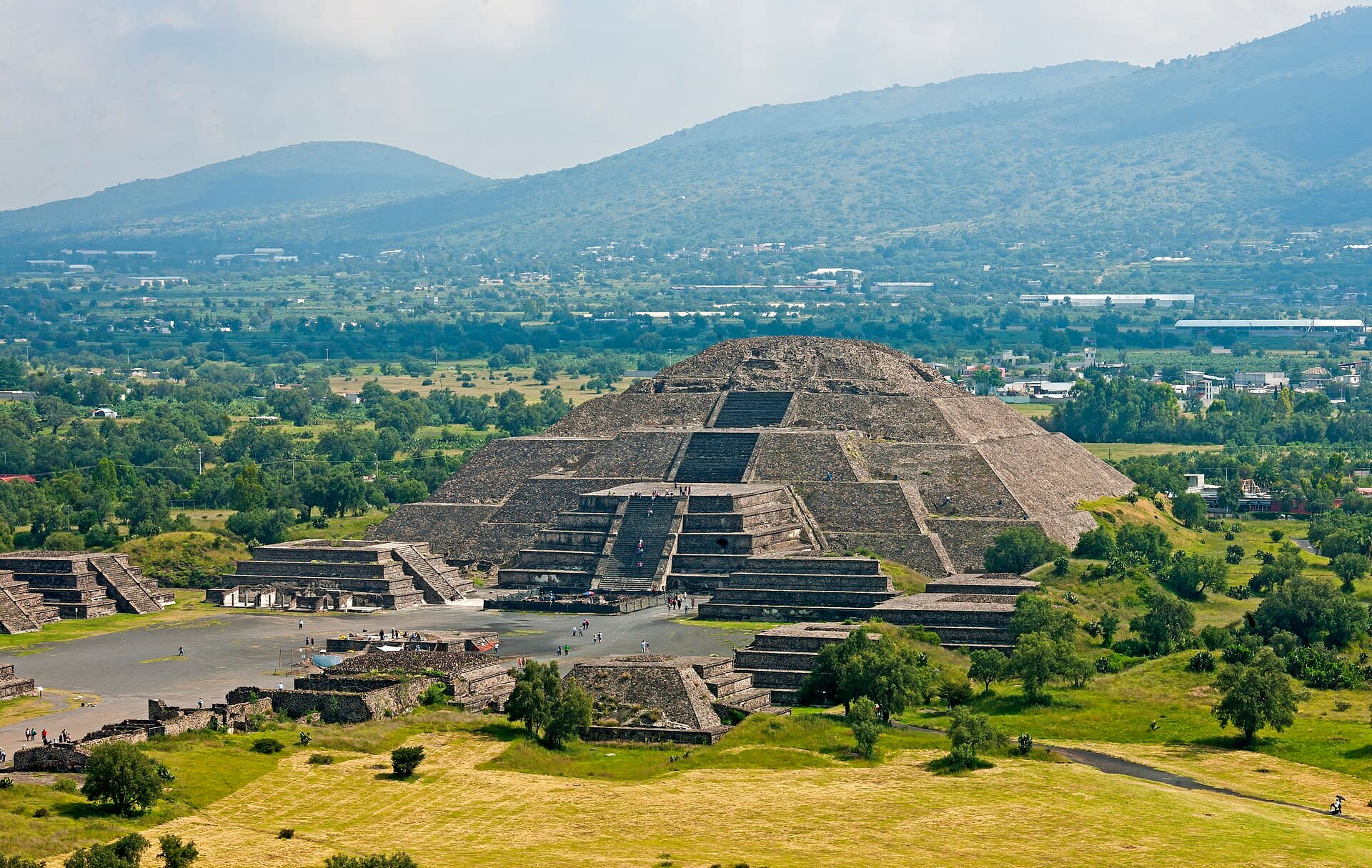
For a long weekend (4–5 days), stay in Mexico City: the Centro Histórico (cathedral, Palacio Nacional, Zócalo), the Anthropology Museum in Chapultepec, and the Coyoacán neighborhood (Frida Kahlo's Casa Azul) form a coherent loop. Add a half-day at Teotihuacán (50 km, one hour by road) for the pyramids of the Sun and the Moon — arrive at opening (8 a.m.) to beat the heat and the crowds. For one week, the Mexico City–Oaxaca pairing is the obvious play: three days in the capital, a 50-minute flight or overnight bus to Oaxaca, three days in the colonial city (Mercado de Abastos, Monte Albán, the buzzing zócalo, mole-focused restaurants). With 10 to 14 days, add the craft villages around Oaxaca (Teotitlán del Valle for Zapotec rugs, San Bartolo Coyotepec for black pottery, Tlacolula for its Sunday market) and consider a day at Hierve el Agua or the ruins of Mitla. The trip then becomes a full immersion in Zapotec and mestiza civilization.
For travelers with two full weeks, Central Mexico opens up to a more ambitious triangle. After four days in Mexico City (Centro Histórico, Coyoacán, the Anthropology Museum, Teotihuacán), a stop in Puebla — two hours by bus from the capital — is well worth it: this UNESCO-listed Baroque city is the birthplace of mole poblano and the Talavera tile tradition. One night is enough to walk the Zócalo, see the cathedral and have dinner over chiles en nogada. From Puebla, continue to Oaxaca by bus (5 hours) for the second half of the trip. Four or five days in Oaxaca let you cover Monte Albán, the artisan villages and at least one signature restaurant evening. A day trip to Hierve el Agua — petrified waterfalls overlooking a stark valley — is a memorable closing chapter before the return flight from Oaxaca (OAX).
The month of November deserves a particular mention. In Oaxaca, Día de los Muertos (November 1–2) transforms the city into a cultural experience of rare intensity: giant ofrendas at the Xoxo cemetery, candlelit processions, marigolds carpeting the streets, a strangely festive melancholy that runs counter to every Western intuition about death. It's one of Mexico's most authentic and powerful festivals, on the condition that you book your hotel three to four months in advance — the city sells out weeks in advance for those nights. In Mexico City, the festival takes over Paseo de la Reforma and the Zócalo with monumental parades inspired by the Pixar film Coco — spectacular and popular, but less intimate than in the Oaxacan villages.
Finally, an often-overlooked option: pair Central Mexico with Chiapas for a 14- to 18-day trip. From Oaxaca, a domestic flight to Tuxtla Gutiérrez (1h15) opens the door to San Cristóbal de las Casas, Palenque and the Agua Azul waterfalls — a different Mexico, Maya and mountainous, that contrasts sharply with the central altiplano. This kind of longer loop is what returning travelers tend to choose for a second or third trip.
Read also
- Mexico City, the capital with a thousand faces — Teotihuacán, the Anthropology Museum, Frida Kahlo and Mexico's best street food.
- Oaxaca, Mexico's gastronomic capital — Moles, artisanal mezcal, Monte Albán and the country's finest craft scene.
- Mexico travel guide — Everything you need to know before you go: visa, budget, safety and best regions.