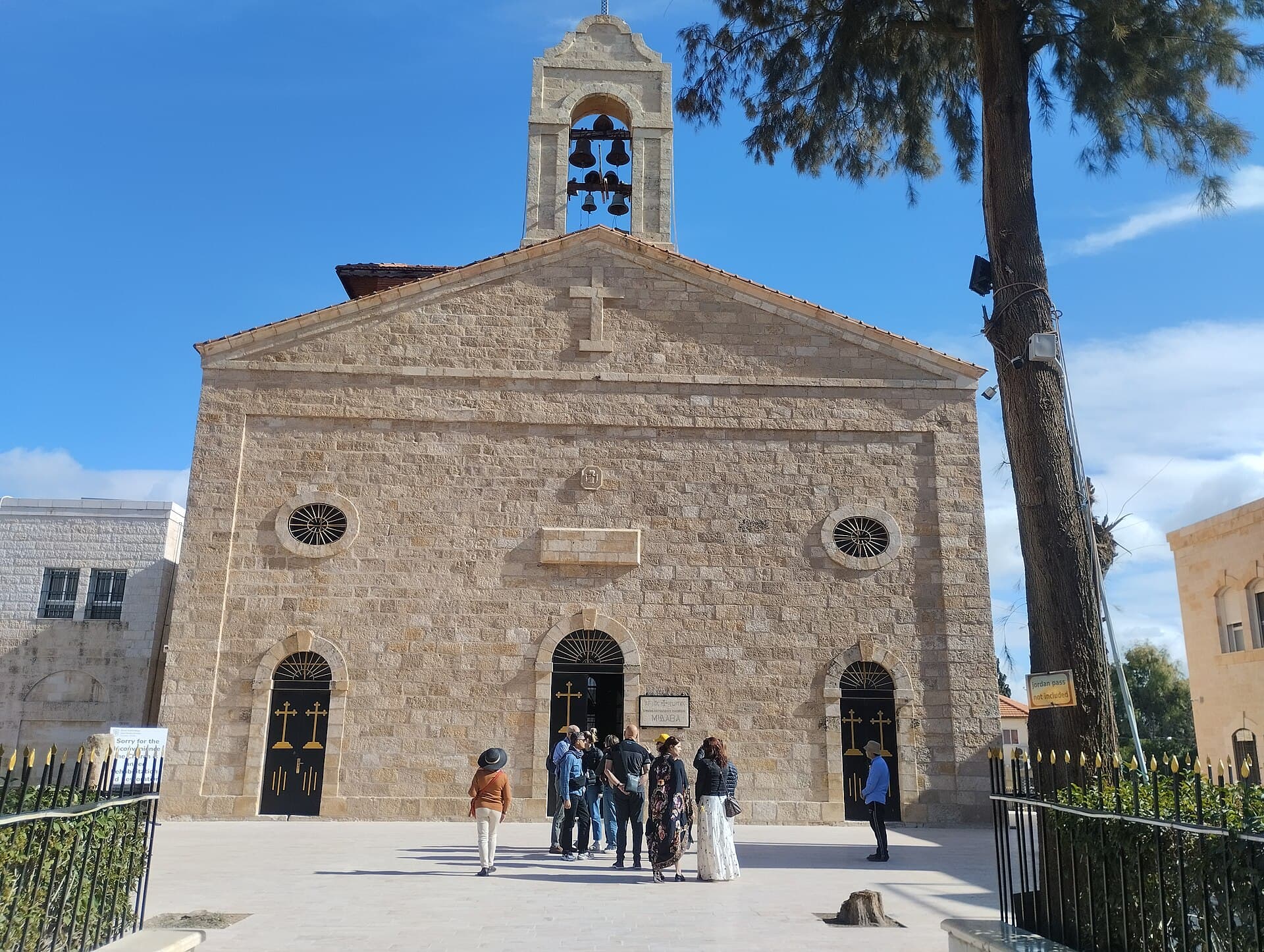
A visit to Madaba organises around three complementary poles which take 2-3 hours.
The Saint George's Church pole is the absolute priority. The Greek Orthodox church rebuilt in 1896 houses, at its centre, the famous Madaba map mosaic, a still-visible fragment (about 25% of the original) of a large 6th-century Byzantine floor mosaic that depicts the Holy Land with a degree of topographic precision unique for the time. Restored by Italian archaeologists in the 1960s, it remains in situ, at the height of the faithful's feet. A rope system delimits the space; a multilingual explanatory panel provides reading keys. The depiction of Jerusalem (at the centre of the map), with its Holy Sepulchre, its cardo maximus, its gates and its identifiable churches, is the most striking detail. Count 30 to 45 minutes with a local guide (suggested donation 5-10 JOD).
The Madaba Archaeological Park pole (5 minutes' walk from Saint George's Church) brings together other exceptional Byzantine mosaics. The Hippolytus Mosaic (5th-6th century), found in a villa, depicts high-quality mythological scenes — Aphrodite, Adonis, the personified seasons. The Virgin Mosaic (6th century) and several others complete a very well-documented museum route. The ticket also includes access to the Church of the Apostles (a bit further), famous for its mosaic of Thalassa (personified sea). Count 1 hour for the whole park.
The Madaba Regional Archaeological Museum (entry via the Archaeological Park) presents more recent finds from excavations around the town: Nabataean pottery, Byzantine seals, oil lamps, mosaic fragments. A quick 30-minute visit is enough.
Then take the road to Mount Nebo (10 km west) for the indispensable complement: biblical panorama over the Promised Land, 4th-century Byzantine basilica with its original mosaics, modern memorial. The site, managed by the Franciscans since 1933, is calm and well laid out. Count 1 to 2 hours. On a clear day (often in winter and spring), you can see Jerusalem, Bethlehem, Jericho and the Dead Sea 1,200 metres below — one of the most moving panoramas in the Levant.
Read also
- Amman, capital on seven hills — 30 km north-east: Roman Citadel, ancient theatre and the hilltop cafés of Rainbow Street.
- Jerash, the Pompeii of the Middle East — 80 km north: one of the best preserved Roman cities in the world.
- Jordan — Complete country guide: entry rules, budget, when to visit, regions.
- Petra, 7th Wonder of the Modern World — 230 km south: the Nabataean city carved into the rose cliffs.