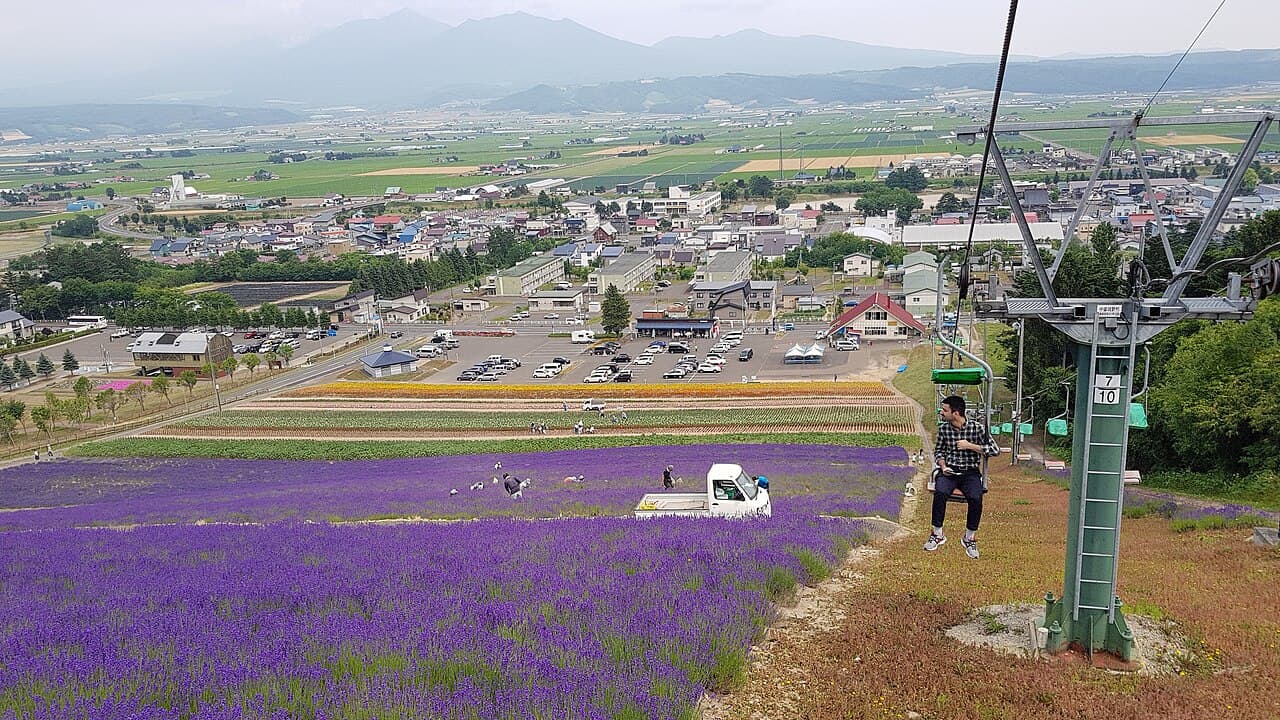
Hokkaido is simultaneously the largest and least densely populated of Japan's four main islands. Spread across a surface the size of Austria, it is home to just 5.2 million people — more than half of them in the Sapporo conurbation alone. This imbalance between size and density is precisely what makes the island so appealing: here, nature reasserts itself within kilometres of the city, brown bears still come down to salmon rivers in autumn and national parks of continental scale extend across near-virgin land.
For a short stay (4-5 days) based in Sapporo, the programme is rich without a car. Two days in the capital (Snow Festival or Nijo Market depending on season, Sapporo Brewery, miso ramen, Odori Park, Susukino in the evening), a day in Otaru (canal, glassware, seafood, 30 min by JR), and a day in Noboribetsu for the onsen and the Jigokudani (Hell Valley, with its bubbling sulphur springs).
With a week (7 days) and a car, the classic circuit links Sapporo, Otaru, Niseko (in winter) or Furano (in summer), Biei (rolling hills and flower fields), Asahikawa and the national parks — a comfortable pace to cover the highlights of central and western Hokkaido.
With 10 to 14 days, add the Shiretoko Peninsula (UNESCO) in the east — a day's drive from Asahikawa, but a total wilderness immersion. Hakodate in the south, with its star-shaped fort (Goryokaku), morning market and Franco-Japanese architecture (Motomachi), deserves two days at the start or end of the circuit.
Read also
- Sapporo, capital of the north — Snow festival, miso ramen, Sapporo Brewery and the seafood market — the complete guide to Hokkaido's metropolis.
- Japan — Complete guide to the archipelago: visa, budget, regions to discover and the best time to visit.
- The Kanto Region — Tokyo and its surroundings: Nikko, Kamakura, Hakone and Mount Fuji.
- Kansai — Kyoto, Osaka and Nara — Japan's historic heartland: thousand-year-old temples, geisha districts and extraordinary cuisine.