Region
Hokkaido
Japan's great northern island concentrates the snowiest winters, the wildest national parks and the freshest seafood in the entire archipelago — breathtaking nature in every season.
Hokkaido is Japan's vast northern island, a wilderness the size of Austria that stands in sharp contrast to the dense, urban image of the rest of the archipelago. Winters here are Siberian — and that is precisely what draws skiers from around the world to Niseko, whose light, dry powder snow (the legendary *champagne powder*) is widely regarded as the finest in the world. Each winter, enormous snowfalls accumulate on the volcanic slopes in a dream-like powder, attracting Australians, Canadians and Japanese alike in search of perfect skiing.
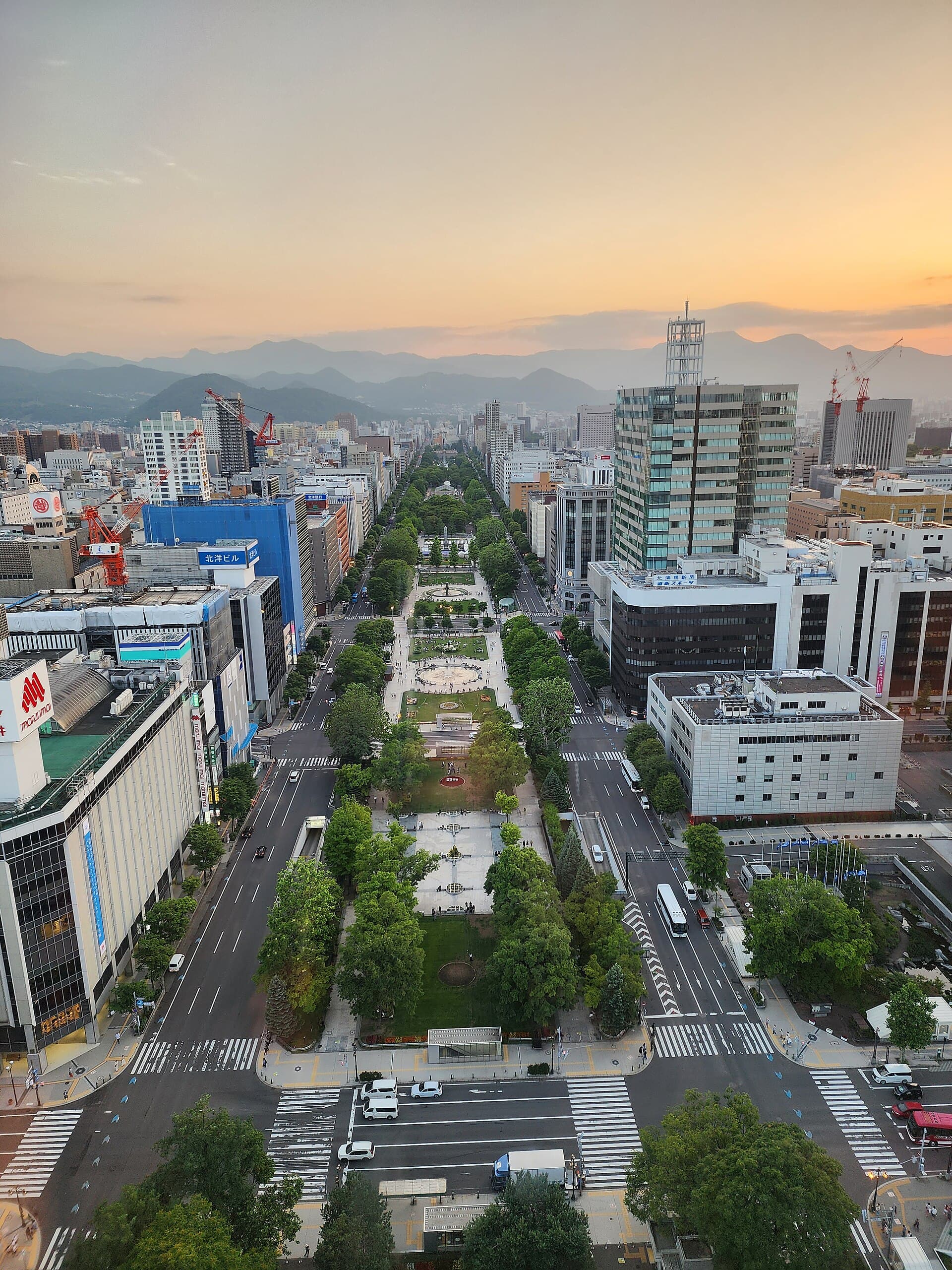
The capital Sapporo is Japan's fifth city and the administrative and cultural heart of the north. Its global fame rests on the Yuki Matsuri (Snow Festival), held each February: monumental snow and ice sculptures, some the size of buildings, fill Odori Park for a week in an extraordinary spectacle. But Sapporo also earns its place through gastronomy — miso ramen was born here — and through the Sapporo Brewery, founded in 1876, where a guided visit and tasting are not to be missed.
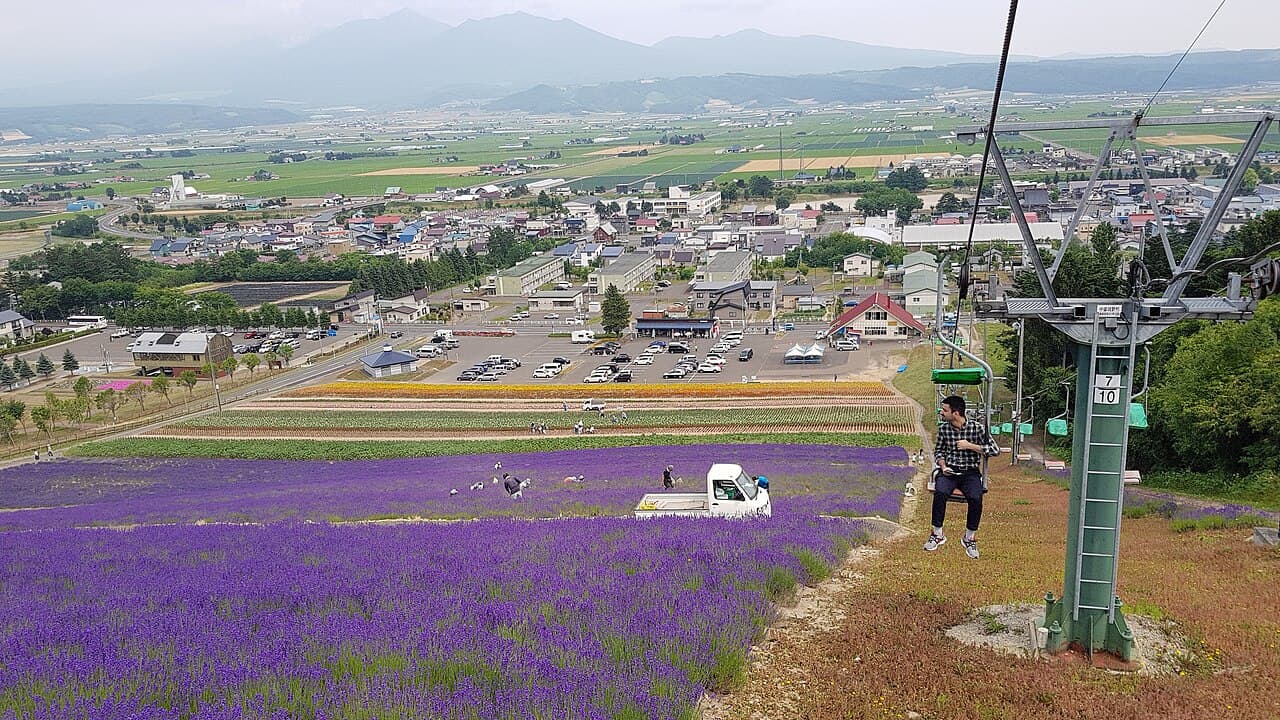
Deep in the interior, Furano erupts each July under the colours of lavender: purple fields stretch as far as the eye can see across gentle hills, making this small rural town one of Asia's most spectacular photographic destinations. Further east, Daisetsuzan National Park — Japan's largest — offers alpine hikes across still-active volcanoes, high-altitude hot springs and an autumn foliage season (momiji) that begins weeks earlier than anywhere else in Japan.
At the far north-eastern tip, Shiretoko (UNESCO World Heritage Site) is one of Japan's most pristine wilderness areas: brown bears, white-tailed eagles, salmon running in crystal rivers, and whales and orcas in the nearby waters. The onsen of Noboribetsu, fed by multiple springs of different mineral compositions, are among the most celebrated therapeutic baths in Japan. And the romantic canal at Otaru — a former trading city animated by stone warehouses and hand-blown glass shops — offers a gentle interlude between wilder adventures.
Spots in the region
Situation
Où se situe Hokkaido ?
Ouvrir la carte en grand sur OpenStreetMap →Frequently asked questions
When is the best time to visit Hokkaido?+
Do you need a car in Hokkaido?+
What is the Sapporo Snow Festival?+
Why is Niseko considered one of the world's best ski resorts?+
How do you get to Hokkaido from Tokyo?+
What seafood should I try in Hokkaido?+
Our verdict
Hokkaido is Japan in a completely different register — larger, colder, wilder, quieter. The island rewards those who take the time to explore it by car, stopping where the road narrows between two flower fields, sinking into an outdoor hot spring under falling snow or eating a fresh sea urchin at a harbour market. Choose a strong season — winter for ski and the festival, summer for the flowers, autumn for the momiji and seafood — rent a car and resist the urge to cover everything. The island is too large to summarise in a week, but each season delivers a complete and memorable experience that makes you want to come back for the next one.