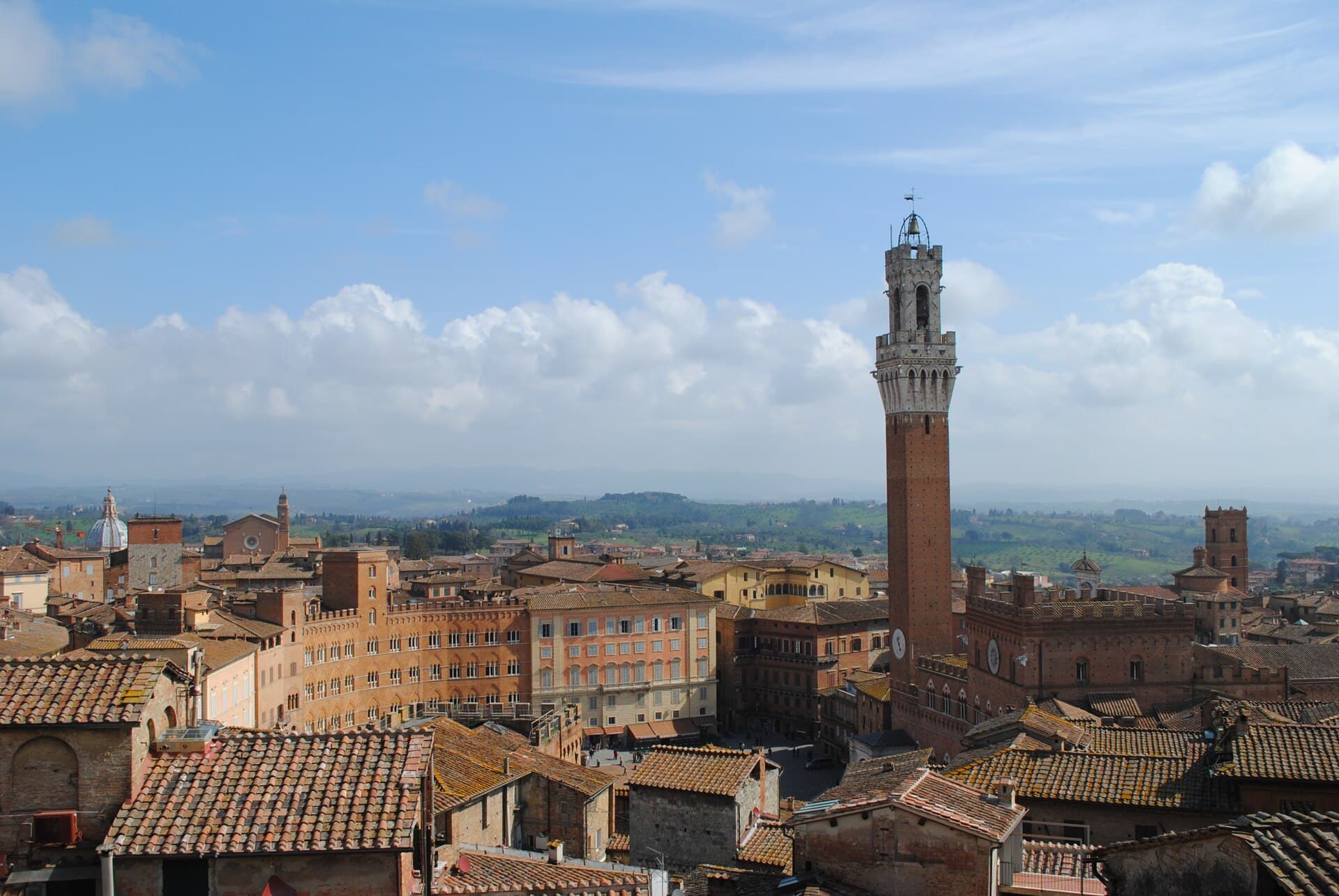
Central Italy enjoys a continental Mediterranean climate: hot dry summers, mild winters in Rome and chillier ones in the Apennines and Umbria. The visit window splits cleanly into two excellent halves.
Spring (mid-April to late June) is the headline season. Temperatures sit between 16 and 26 °C in Rome and Florence, the countryside is in full bloom and days lengthen towards 14 hours of sunshine by June. Sights and museums are accessible without the summer queues, even though Easter and the May public-holiday weekends bring spikes of crowding. The Tuscan countryside is at its absolute best in May: poppies through the wheatfields, vines budding, cypresses silhouetted against an impossibly blue sky. April is a month for the Roman gardens — the Villa Borghese, the Aventine — and for cherry blossom around Lake Bolsena and the green hills of Umbria. June remains excellent provided you reserve museums weeks ahead; the daylight hours stretch on warm evenings and the piazzas hum until late.
Autumn (September to mid-November) is the second ideal window. September is still summery (25-28 °C) but the tourist tide retreats once schools restart. October is the harvest month in Tuscany, the white-truffle season in San Miniato, the chestnut window in Umbria — gastronomy peaks now. The October light on the Val d'Orcia hills is one of the great visual experiences in Central Italy. The autumn sagre — themed food festivals — multiply across Tuscan and Umbrian villages: a truffle fair in Norcia, a wild-boar sagra in Chianti, fresh-vintage tastings in the Montalcino cantine in November. This is also the cheapest moment of the year for accommodation after the August lull.
Winter (December to March) is a quietly underrated alternative. Rome stays mild (10-15 °C), museums are accessible without a queue and the Christmas markets bring a particular atmosphere to the streets. Snow is rare but possible in Umbria and Le Marche. Florence is colder (5-12 °C in January) and some countryside accommodation closes. For art lovers who prefer empty museums to warm sunshine, winter is a serious option: the Vatican Museums and the Uffizi can host two to three times fewer visitors than in summer — a rare chance to linger in front of the masterpieces. The Christmas market on Piazza Navona and the living presepi (nativity tableaux) in Umbria's villages are among the most atmospheric in Italy.
Month by month: April-May (ideal, moderate crowds, flowers); June (excellent but reservations mandatory); July-August (35-40 °C heat, peak crowds, peak prices — avoid for cultural sightseeing); September-October (ideal, harvest light); November (quiet, intermittent rain, low prices); December-March (calm, cold in Florence, mild in Rome, unique atmosphere).
Read also
- Rome, the Eternal City — The Roman Forum, the Colosseum, the Vatican and la dolce vita in Italy's capital.
- Florence, cradle of the Renaissance — The Uffizi, the Duomo and the Chianti hills just beyond the city gates.
- Italy — Complete country guide: entry rules, regions, budget and when to visit.
- Northern Italy — Venice, the Cinque Terre and the Po Valley to explore further north.