Central Italy has a dense rail network that simplifies travel between the major cities and the regional hubs. Rome Termini is the main pivot, linked to Florence in 1 hour 30 by the Frecciarossa (Trenitalia high-speed) — the fastest and most comfortable option between the two regional capitals. Florence also connects to Bologna (35 minutes), Milan (1 hour 45) and Naples (3 hours via Rome). The Rome-Florence distance is about 280 km: the Frecciarossa covers it at 300 km/h with only two intermediate stops. Tickets bought through Trenitalia or Italo (the private competitor, often slightly cheaper) start at €19-29 in the 'Base' fare bracket if you book 30-60 days ahead, against €60-90 if you walk up on the day.
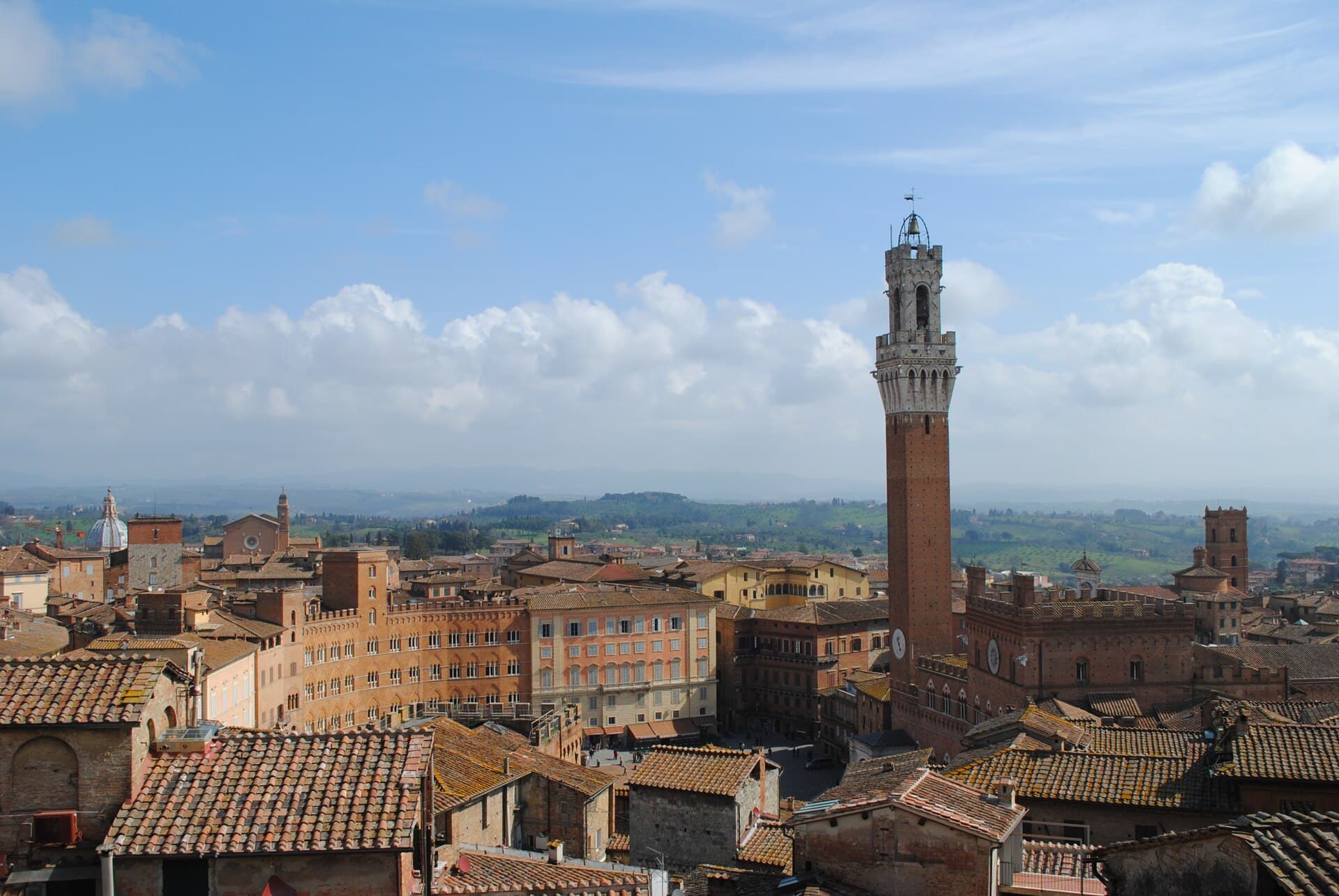
From Rome, Intercity or Regionale trains reach Orvieto (1 hour 15), Viterbo (1 hour 30) and Sulmona for the Abruzzi. From Florence, regional trains serve Siena (1 hour 30), Arezzo (1 hour), Pisa (1 hour) and Lucca (1 hour 30). Pisa hosts the international airport for the area, a few minutes from the city centre by shuttle. For Siena from Florence, note that Trenitalia services are slow and require a change at Empoli: the SENA or Flixbus coaches from Florence's bus terminal are often more direct and convenient.
A car becomes essential as soon as you want to explore the countryside. The Tuscan and Umbrian secondary roads (strade provinciali) are narrow, winding and spectacular — the SP2 between Greve in Chianti and Siena, the SP146 linking Pienza and Montepulciano in the Val d'Orcia, the ridge road between Assisi and Spoleto in Umbria are among the loveliest drives in Europe. Hire from Rome, Florence or Pisa from €30-50/day for a small car. Beware the ZTL (limited traffic zones) in every historic centre — a camera caught your plate when you weren't authorised generates a fine sent home weeks later, sometimes via the rental company. Always tell your rental agency in advance which restricted town you plan to enter so they can register the plate properly.
Within cities, walking remains the best way to explore the historic centre. Buses (ATAC in Rome, ATAF in Florence) cover the outer zones. In Rome, the metro (Lines A and B) links the strategic points (Termini, Vatican via Ottaviano, Colosseum via Colosseo on Line C) but doesn't cross the pedestrian historic centre. Tram line 8 connects the centre to Trastevere efficiently. Taxis or ride-hails (Uber works in Rome and Florence) handle airport transfers: Rome Fiumicino is 35 km out (fixed €50 taxi, or the Leonardo Express train at €14 in 32 minutes); Florence Peretola is 6 km from the centre (taxi €20-25, or the T2 tram opened in 2019 at €1.50). In Florence, most sights are within 15 minutes' walk of Santa Maria Novella station, which makes a hire car genuinely unnecessary inside the city.
Read also
- Rome, the Eternal City — The Roman Forum, the Colosseum, the Vatican and la dolce vita in Italy's capital.
- Florence, cradle of the Renaissance — The Uffizi, the Duomo and the Chianti hills just beyond the city gates.
- Italy — Complete country guide: entry rules, regions, budget and when to visit.
- Northern Italy — Venice, the Cinque Terre and the Po Valley to explore further north.