A visit to Luxor classically organises across two banks, each deserving at least a full day.
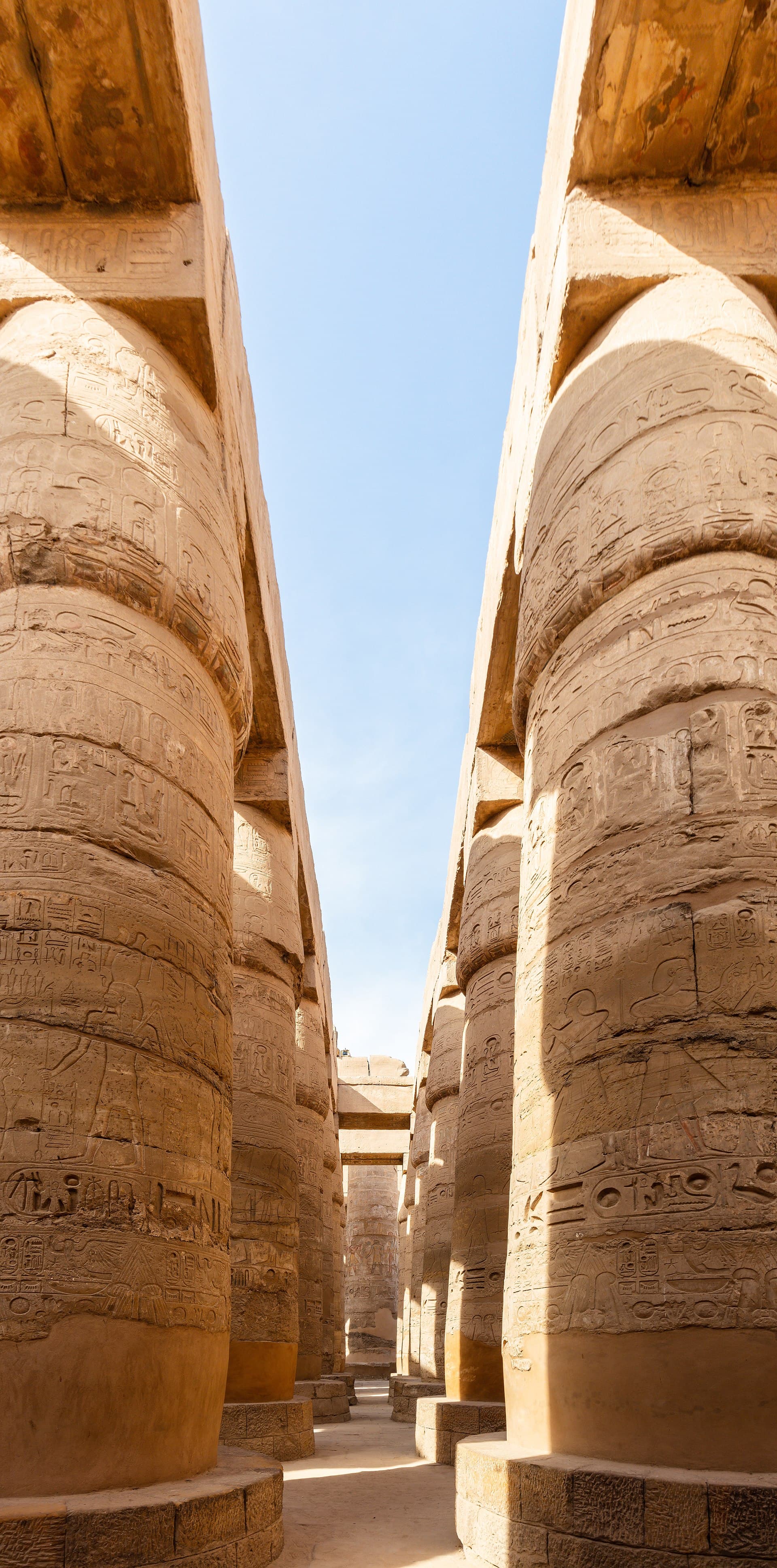
On the east bank, two major temples. The Temple of Karnak is probably the most impressive religious building humanity has ever built: 123 hectares, built and enriched by 30 generations of pharaohs over 2,000 years (Middle Kingdom to Ptolemaic era). Entry is via the avenue of rams, then the first pylon, then the hypostyle hall with 134 papyrus-shaped columns 23 metres high — one of the largest covered halls of antiquity, whose forest layout leaves visitors literally speechless. Continue to the sacred lake, the obelisks of Hatshepsut and Thutmose I, the White Chapel of Senusret I and the Temple of Khonsu. Allow 3-4 hours, ideally early morning for grazing light. In the evening, the sound and light show illuminates the columns for 75 minutes (€25-30 per person, rotating languages).
The Temple of Luxor, smaller (260 m long), built under Amenhotep III then enlarged by Ramesses II, is the east bank's other jewel. Its visit at nightfall, when columns are lit and the Abu el-Haggag Mosque perched on the colonnade emerges in golden light, is one of the great moments of the stay. The Avenue of Sphinxes — 2.7 km, restored and ceremonially reopened in 2021 — now links the two temples; you can walk it in 45 minutes.
On the west bank, accessible in 15 minutes by taxi or boat, lie the funerary sites. The Valley of the Kings holds 63 known royal tombs, including Tutankhamun (KV62), discovered in 1922 by Howard Carter — the mummy is still visible in situ, but the objects have been transferred to the GEM in Giza. The basic ticket gives access to 3 tombs among those open in rotation. Prioritise if possible the tomb of Seti I (KV17), considered the finest in the entire valley. The Temple of Hatshepsut at Deir el-Bahari, carved into the cliff and forming three stacked terraces, is an absolute architectural masterpiece: commissioned by Queen Pharaoh Hatshepsut (1490 BC), it integrates with the landscape with a strikingly modern elegance. The Colossi of Memnon (two 18-metre statues of Amenhotep III), the Valley of the Queens (with the optional painted tomb of Nefertari, absolute peak of Egyptian art, €50 extra) and the Ramesseum (Ramesses II's funerary temple, famous for its toppled colossus that inspired Shelley) complete the west bank visit.
Additionally, the hot-air balloon flight at sunrise (45-60 min, €80-130 per person) over the Valley of the Kings is one of the most memorable experiences of the trip. The Luxor Museum on the Nile Corniche, smaller than the GEM but of remarkable scenography, holds two royal mummies (Ramesses I and Ahmose I) and a treasure of objects from Tutankhamun's tomb. For enthusiasts, a day excursion to Dendera (Temple of Hathor, one of the best preserved in Egypt, 65 km north) and Abydos (Temple of Seti I, 160 km north) superbly extends the visit.
Read also
- Aswan, Nubian softness — 4h by train or 3 nights by cruise: Philae, Elephantine and the Nubian soul of the Nile.
- Abu Simbel, Ramesses II's temples — 280 km south of Aswan: the rock-cut masterpiece saved by UNESCO.
- Egypt — Complete country guide: entry rules, budget, when to visit, regions.