Region
Alexandria
Mediterranean and Saharan Egypt: cosmopolitan Alexandria (founded by Alexander the Great in 331 BC, capital of the ancient world), the blue beaches of El Alamein, the Siwa oasis where Alexander was proclaimed son of Amun, and the mythical White Desert with its surreal chalk formations.
The Alexandria and Mediterranean region offers the other face of Egypt — Mediterranean, Greco-Roman, cosmopolitan and Saharan all at once. Far from the pyramids and pharaonic temples of the Nile Valley, this is where a more European Egypt unveils itself in its historical DNA (Greek foundation, Roman occupation, Ottoman and French and British colonial presence) and more contrasting in its landscapes (Mediterranean Sea to the north, sea of sand to the south).
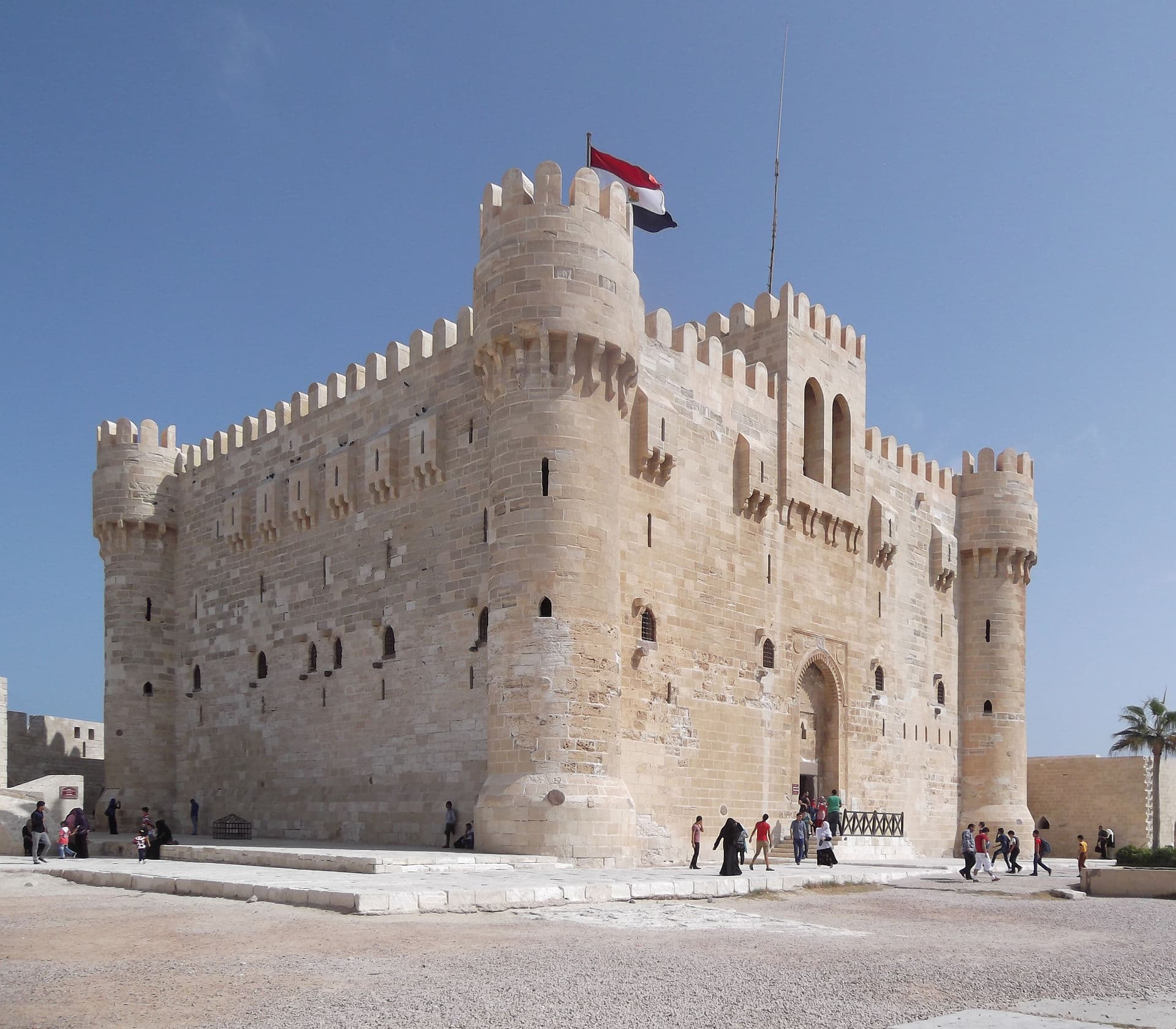
Alexandria (5 million inhabitants, second city of Egypt), founded in 331 BC by Alexander the Great during his conquest of Egypt, was for 700 years the intellectual capital of the ancient world — seat of the legendary library (700,000 manuscripts, the first universal library of humanity, destroyed by flames in disputed historical circumstances), of the lighthouse (one of the Seven Wonders of the Ancient World, collapsed in the 14th century after several earthquakes), and of the mouseion (first scientific research centre). Today, the city remains haunted by its past glory and preserves an exceptional Greco-Roman heritage: Kom el-Shoqafa catacombs (1st-2nd century, unique mixture of Egyptian and Roman art), Pompey's Pillar (vestige of the Serapeum, 3rd century), Roman amphitheatre (2nd century), Citadel of Qaitbay (15th century, built on the exact site of the ancient lighthouse with its salvaged stones). The modern Bibliotheca Alexandrina (inaugurated in 2002, contemporary Norwegian architecture in the shape of a solar disc) seeks to recall the lost grandeur — 8 million books, 4 museums, 13 research libraries, gigantic atrium.
West of Alexandria, the Mediterranean north coast unfolds over 500 km of long white sand beaches and turquoise water — paradoxically little known to Western tourists because massively developed for Egyptian domestic tourism (wealthy Cairenes own holiday homes there). El Alamein (100 km west of Alexandria) keeps the memory of the World War II battles (October-November 1942) which marked a turning point in the North African conflict — British, German and Italian military cemeteries, military museum, commemorative monuments. Marsa Matrouh (290 km west of Alexandria) is the reference seaside resort for Egyptians — spectacular beaches (Cleopatra Beach, Agiba Beach), uniquely turquoise waters, but tourist infrastructure without particular charm.
800 km south-west of Alexandria (deep in the western desert, 50 km from the Libyan border), the Siwa Oasis (30,000 inhabitants) is one of the most singular and authentic destinations in Egypt. Cut off from the rest of the country for millennia (paved road only since 1984), Siwa has developed its own Berber culture — Siwi language (spoken by 25,000 people), architecture in crystallised salt bricks (karchif), matriarchal traditions (one of the few communities in the world to officially authorise romantic unions between women until the 2000s). It is here that in 331 BC Alexander the Great was proclaimed son of Amun by the oracle of the temple of Amun (still visible today), confirming his divine status. South of Siwa, the Great Sand Sea (72,000 sqkm sea of sand) and the White Desert (surreal chalk formations, almost lunar landscapes) offer one of the world's most beautiful Saharan experiences — 4x4 excursions and unforgettable nights under the stars.
Explore Alexandria
Situation
Où se situe Alexandria ?
Ouvrir la carte en grand sur OpenStreetMap →Frequently asked questions
How many days do you need to visit Alexandria and the Mediterranean?+
How to reach Alexandria from Cairo?+
Is the Siwa Oasis worth the 8h trip from Cairo?+
What remains of Alexandria's ancient lighthouse and library?+
Is the White Desert really worth the trip?+
Can you swim in Alexandria and on the Egyptian Mediterranean?+
Is the Greco-Roman museum of Alexandria open?+
Our verdict
The Alexandria and Mediterranean region is a destination for seasoned travellers who have already visited classic Egypt (pyramids, Nile, Red Sea) or who seek a radically different experience. Alexandria offers a fascinating immersion in Greco-Roman and cosmopolitan heritage — ideally visit in 2-3 days to explore the catacombs, the Bibliotheca Alexandrina, the Citadel of Qaitbay and the Greco-Roman museum (under renovation since 2015, reopening expected 2026). Siwa and the White Desert require at least 4-5 days (with 8h of road from Cairo or Alexandria) but offer one of the world's most memorable Saharan experiences — green oasis amid dunes, temple of Amun where Alexander was deified, Cleopatra baths, nights under the stars in the White Desert. The Mediterranean north coast (Marsa Matrouh, El Alamein) remains secondary for Western travellers — prefer the Red Sea if you are looking for beach and resort. Visit from April to June or September to October for bearable temperatures everywhere (too intense heat in Siwa in summer).