Santiago de Cuba unfolds in thematic sequences. The colonial historic centre begins at Parque Céspedes: the Nuestra Señora de la Asunción cathedral (free, interesting carved woodwork), the Casa Diego Velázquez (Museo de Ambiente Histórico Cubano, €2, unmissable — oldest colonial building in the Americas, 1522), the town hall (exterior only) with Castro's iconic balcony, and the Hotel Casa Granda for a mojito on the panoramic terrace at dusk. Walk down Heredia street to the Museo del Carnaval (€2, traditional costumes) and the Casa de la Trova (€2 in the evening).
The revolution sites are essential. The Moncada barracks (1953) now houses a school and a small museum (€2) — the façades still bear the bullet marks. The Santa Ifigenia cemetery (5 km from the centre, €2 entry) is a moving site: the monumental mausoleum of José Martí (independence hero), Compay Segundo's grave (legendary musician) and Fidel Castro's modest gravestone since 2016, where he wished to rest simply in Santiago. The hourly changing-of-the-guard ceremony is solemn.
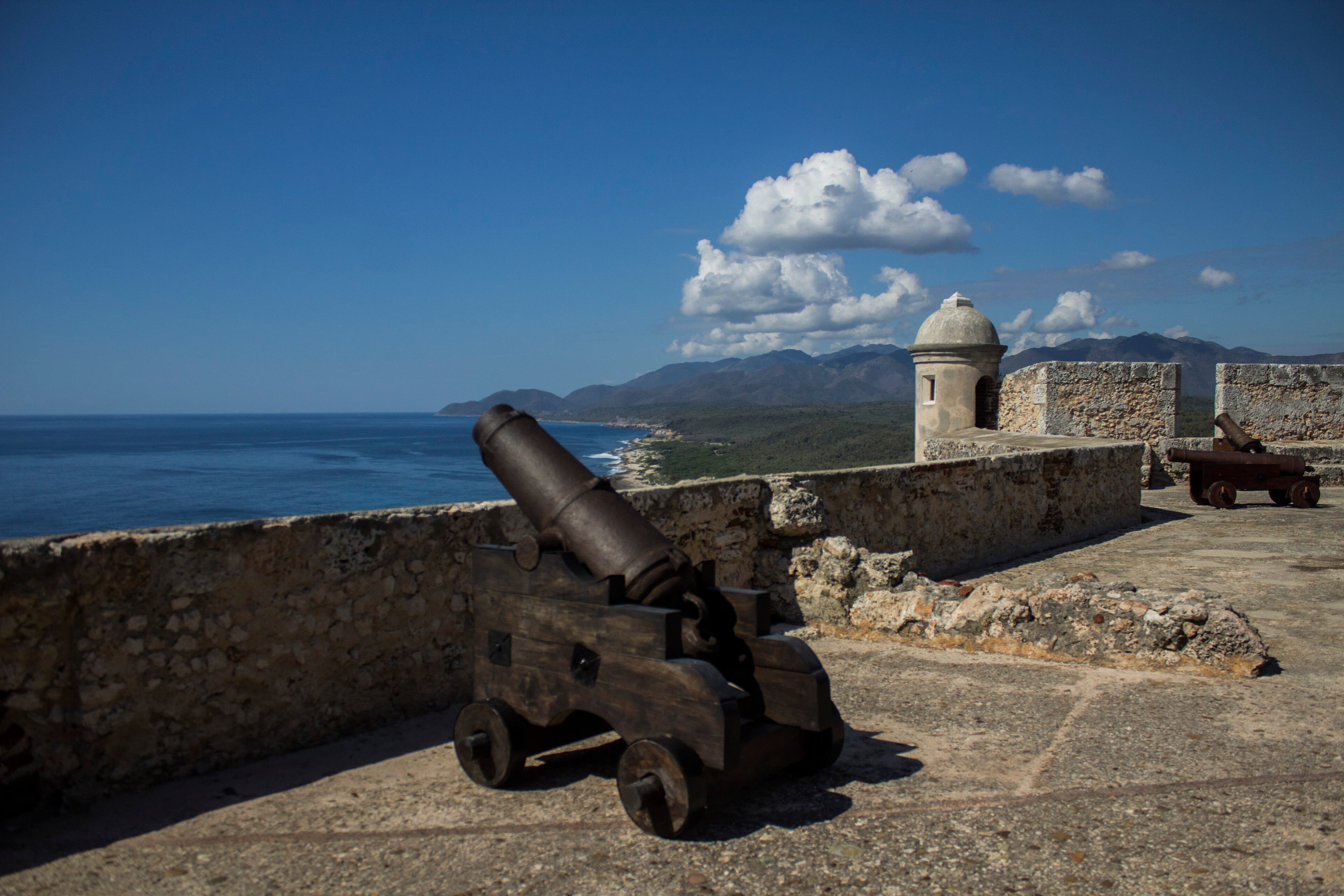
The Castillo del Morro San Pedro de la Roca (10 km south, UNESCO since 1997, €6 entry) is the other unmissable — 17th-century fortress (1638) built by the Spanish to defend the bay against pirate and English attacks. Spectacular views over Santiago Bay and the Caribbean. Small piracy museum inside. Cannon ceremony at sunset (daily at 7:30pm, free).
Music comes alive at night. The Casa de la Trova (Heredia street) is the iconic institution — open every evening from 9pm, very high-level musicians, intimate forty-cover atmosphere. The Casa de la Música (near Parque Céspedes) programmes more rhythmic salsa and timba orchestras. Informal peñas in the private patios of the Tivolí quarter (ask your casa particular) are the most authentic experience. The Casa de las Tradiciones (in Tivolí) hosts a memorable open stage every Friday evening.
Excursions from Santiago. Siboney beach (19 km east, 30 min by taxi) is the easiest — black volcanic sand, turquoise water, beach bars. The El Cobre sanctuary (18 km north-west) is Cuba's most important place of worship — a spiritual and historic visit. The Sierra Maestra offers hikes to Pico Turquino (1,974 m, the highest point in Cuba) over 2-3 days with a mandatory guide (excursion €80-120 with transport and guide). Baracoa (190 km east, 4h by road) is a possible excursion but really requires at least one overnight stay given how much the isolated colonial town deserves it.
Read also
- South-East Cuba and Santiago — Santiago, Baracoa, Sierra Maestra: eastern Cuba, the most authentic and most African.
- Havana — The Cuban capital: UNESCO Old Havana, the Malecón, late-night salsa.
- Cuba — Complete country guide: visa, currency, regions, best time to visit.
- Trinidad — Cuba's most beautiful colonial town, 600 km from Santiago.