Region
Brazilian Amazon
The planet's largest green lung — 5.5 million km² of rainforest in Brazil, accessible from Manaus and Belém, river cruises and lodges in the heart of the jungle to observe unmatched Amazonian wildlife.
The Brazilian Amazon covers 5.5 million km², or 60% of the national territory and the largest part of the Amazon basin shared with eight neighbouring countries (Peru, Bolivia, Colombia, Venezuela, Guyana, Suriname, French Guiana). It's the world's largest rainforest massif, called the "planet's green lung" by ecologists — 20% of world oxygen, 25% of terrestrial biodiversity (40,000 plant species, 2.5 million insect species, 1,300 bird species, 430 mammal species including jaguars, anacondas, pink dolphins).
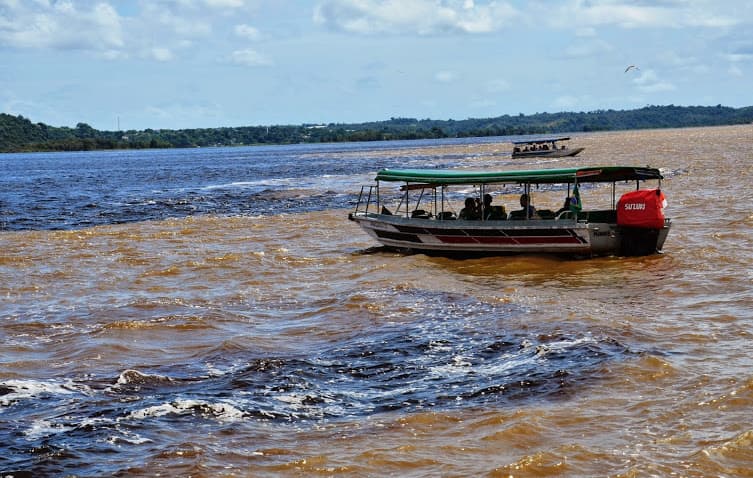
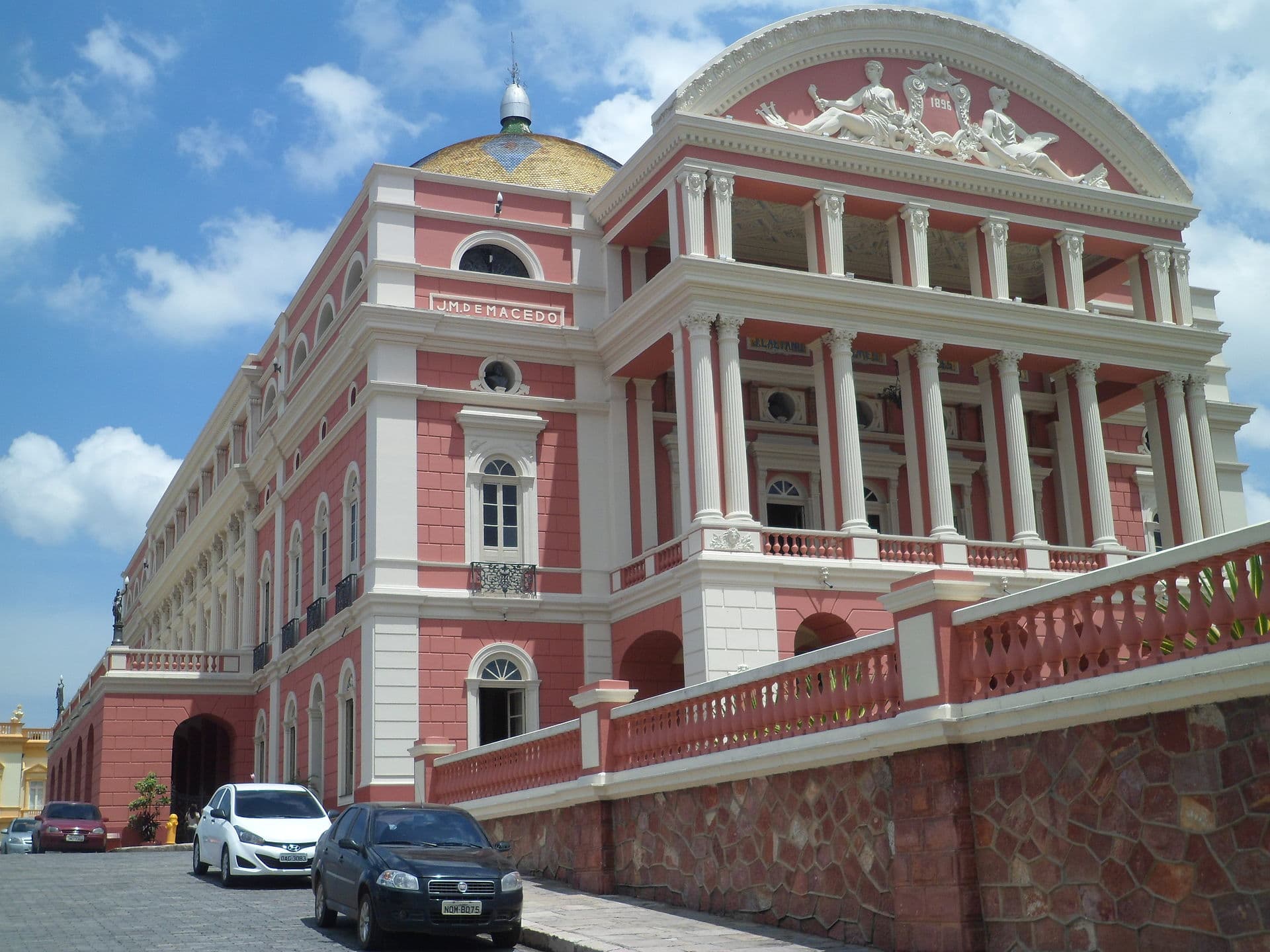
The region administratively covers 9 Brazilian states (Amazonas, Pará, Acre, Rondônia, Roraima, Amapá, Tocantins, Mato Grosso, Maranhão) with two main tourist gateways. Manaus (2.2 million inhabitants), the "Paris of the Tropics", is the Amazon ecotourism backbone — founded in 1669, transformed by the rubber boom in the late 19th century (the Theatro Amazonas, opera house inaugurated in 1896 with Carrara marble, Murano chandeliers, French parquet, is the heritage of this era), it remains today the logistical base for exploring the Rio Negro (Amazon's second largest tributary, acidic black waters) and the Encontro das Águas (meeting of Rio Negro's black waters and Rio Solimões' brown waters flowing side by side without mixing over 10 km).
Belém (1.5 million inhabitants), alternative gateway, is the large city at the Amazonian mouth in Pará. More authentic and less touristy than Manaus, it's also the Amazonian gastronomic capital — Ver-o-Peso (Latin America's largest open-air market, 500 stalls of fruits, fish, medicinal plants, fresh açaí), Mercado de São Brás, Estação das Docas (former docks converted into gastronomic hub).
The Amazon tourism proposition revolves mainly around eco-lodges on the Rio Negro or its tributaries (1-3h fast boat from Manaus). These lodges (Anavilhanas, Mirante do Gavião, Juma Lodge, Anavilhanas Jungle Lodge) offer 3-5 night all-inclusive stays (€300-500/night/person full board) with activities: jungle hike with guide, pirogue excursion in igarapés (small streams), pink dolphin observation (Inia geoffrensis, endemic to the Amazon basin), swimming with dolphins (at Novo Airão), piranha fishing at sunset, listening to jungle night sounds, visiting caboclo communities (mixed populations descending from indigenous and colonists). River cruises (4-7 nights, €1,500-3,500/person) on comfortable boats (Iberostar Grand Amazon, Premium Amazon) are an alternative to explore more widely.
The indigenous peoples of the Brazilian Amazon (Yanomami, Tukano, Tikuna, Munduruku, Kayapó, among 305 identified ethnicities) live mainly in terras indígenas (officially recognised indigenous territories, 13% of Brazilian territory). Respectful community visits (Tukano at São Gabriel da Cachoeira, Munduruku in Pará) are possible with specialised operators and FUNAI (National Indian Foundation) authorisation — avoid "folkloric" visits without ethical framework.
Explore Brazilian Amazon
Spots in the region
Situation
Où se situe Brazilian Amazon ?
Ouvrir la carte en grand sur OpenStreetMap →Frequently asked questions
Manaus or Belém: where to enter the Amazon?+
Which lodge to choose in the Amazon?+
When to visit the Brazilian Amazon?+
Do you need vaccines for the Amazon?+
What budget for an Amazon trip?+
Our verdict
The Brazilian Amazon is one of the world's great ecotourism experiences — a journey into the planet's largest rainforest massif, meeting unmatched biodiversity. Our recommendation: choose Manaus as gateway (numerous domestic flights, polished tourist infrastructure) and book a lodge on the Rio Negro for 3-5 nights (Anavilhanas Jungle Lodge, Juma Lodge, Mirante do Gavião — €300-500/night full board). Add 1-2 nights in Manaus for Theatro Amazonas and Encontro das Águas. Optimal period: July to November (dry season, accessible trails, concentrated wildlife) or February to May (flooded forest, canoe cruise through immersed trees). Book 3-6 months ahead for premium lodges. Yellow fever vaccine mandatory (10 days before departure), antimalarial prophylaxis recommended in remote areas. Budget €1,500-2,500/person for 5 days all-inclusive (domestic flight + premium lodge). It's an unforgettable experience, but physically demanding — plan a recovery stage before or after.