The Brazilian Amazon has two radically different seasons that transform the tourist experience. Temperatures stay stable year-round (28-35 °C with 80-90% humidity), only rainfall varies.
The dry season (July to November) corresponds to low waters — Rio Negro and Amazon levels can drop 10-15 metres from high waters. Positive consequences: accessible walking trails in the forest (jungle hiking possible), ephemeral white sand beaches appear on Rio Negro (August-November, swimming possible), wildlife concentrated around remaining water holes (easier observation of pink dolphins, birds, caimans), fewer mosquitoes (reduced flooded zones), optimal piranha fishing. Negative consequences: some igarapés (small streams) are dry and inaccessible by boat, less spectacular forest landscape than flooded forest.
The high water season (December to May) corresponds to the flooded forest (igapó) — water rises up to 10-15 metres above the forest floor, transforming the forest into a 250,000 km² aquatic labyrinth. Positive consequences: canoe navigation through immersed trees (absolutely unique world experience), access to otherwise inaccessible areas, very visible aquatic wildlife, more active pink dolphins, soft light and exceptional photography. Negative consequences: impractical walking trails (up to 10 m of water above ground), frequent (but brief, 30-60 min late afternoon) rains, maximum humidity, more mosquitoes.
Our recommendation for a first trip: September-October (transition end of dry season, slightly cooler temperatures, possible hiking, start of water rise, optimum). For river cruise and photography enthusiasts: February to May (flooded forest at maximum). Avoid March-April (peak rains, sometimes uncomfortable conditions) if planning hiking.
Read also
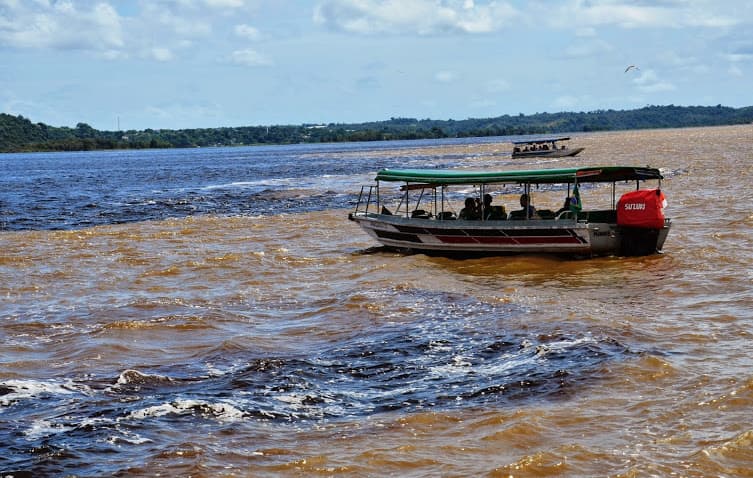
- Manaus — Amazon gateway: Theatro Amazonas, Encontro das Águas, Rio Negro lodges.
- Brazil — Complete country-continent guide: regions, formalities, best time.
- Pantanal — Another Brazilian wildlife paradise: global capital of wild jaguars.
- Rio and Southeast — Combine with the Amazon for a diversified city-nature trip.