Region
Bahia
The cradle of Afro-Brazilian culture — Salvador's Pelourinho (UNESCO 1985, Brazil's first capital 1549-1763), capoeira and candomblé, spectacular Chapada Diamantina and endless coconut palm beaches.
Salvador and the Northeast is Brazil's cultural and historical soul — the region where Afro-Brazilian traditions take root, where the country's first capital was founded (Salvador in 1549, capital until 1763), where capoeira, candomblé, axé, street carnival and dendê cuisine flourished. It's also the region concentrating some of Brazil's most beautiful beaches — the Northeast coast extends over 3,000 km, from southern Bahia to Maranhão, lined with coconut palms as far as the eye can see.
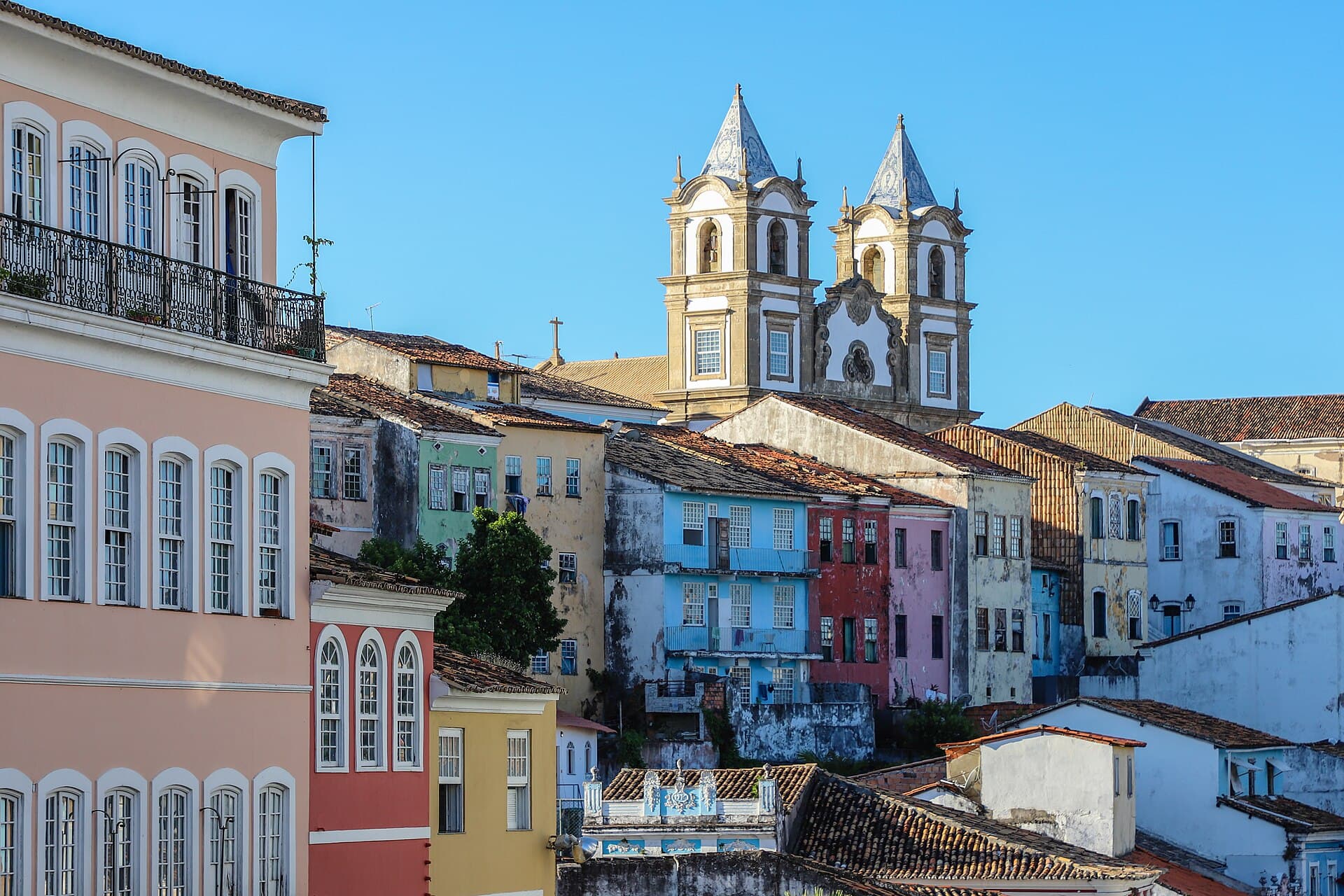
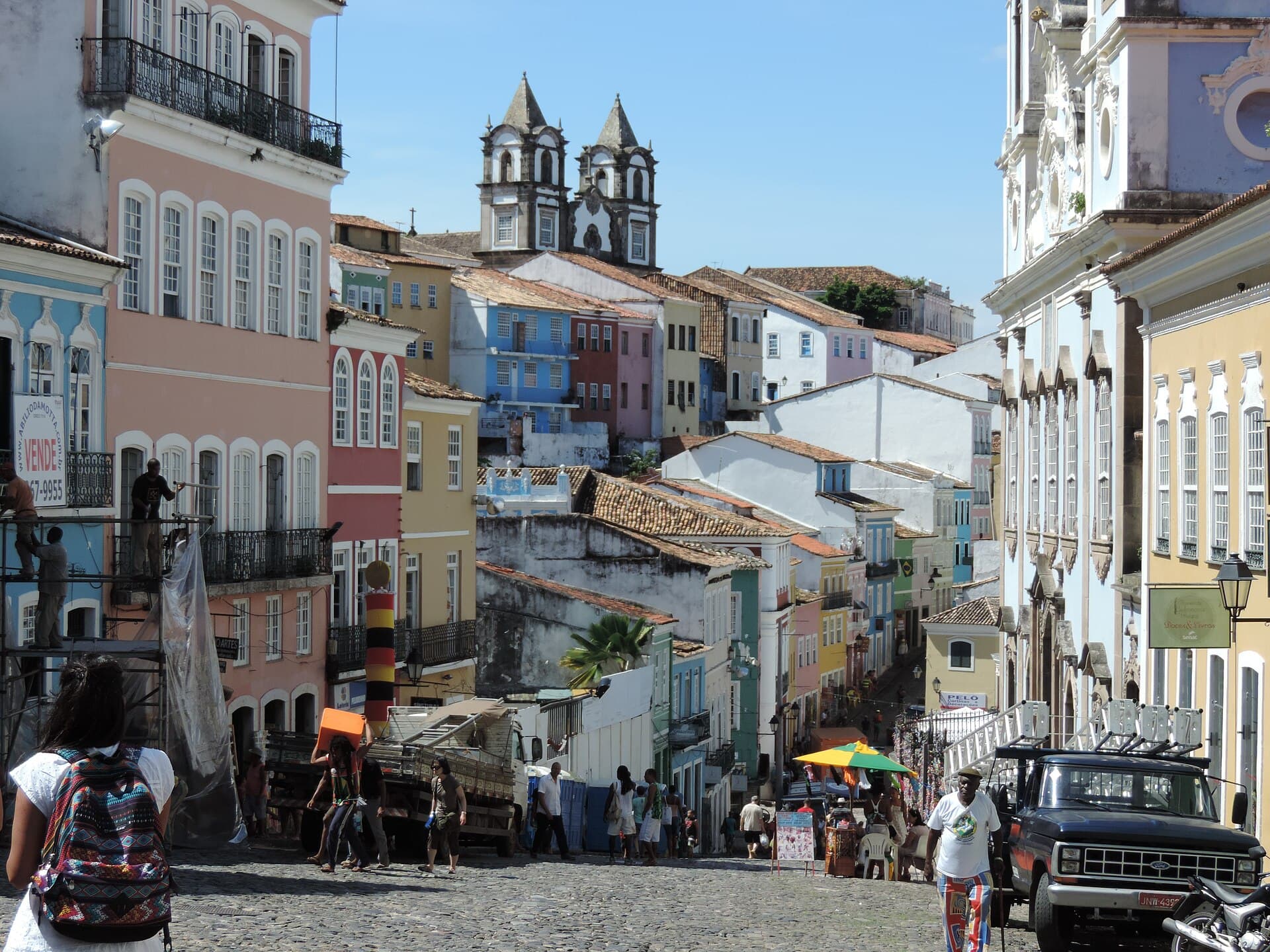
Salvador da Bahia (3.5 million inhabitants, country's 4th city) is the cultural jewel — founded in 1549 by Tomé de Sousa, colonial Brazil's capital until its transfer to Rio in 1763. Its Pelourinho (historic centre), UNESCO-listed in 1985, is one of Latin America's best-preserved colonial architectural ensembles — 800 17th-18th century buildings painted in vivid colours (yellow, blue, pink, green), 17 Baroque churches (including Igreja de São Francisco, 1708, interior entirely gold-covered — Brazil's most precious colonial Baroque heritage), cobblestone squares (Largo do Pelourinho, Terreiro de Jesus), steep little streets (Ladeira do Carmo). This is where Afro-Bahian culture flourishes — daily capoeira rodas at Forte da Capoeira, candomblé in terreiros (Casa Branca, Ilê Axé Opô Afonjá), percussion groups (Olodum, Ilê Aiyê) that influenced Michael Jackson and world music.
Around Salvador, the Bahian coast offers some of Brazil's most beautiful beaches. Praia do Forte (80 km north, ecological resort with Tamar sea turtle protection project, calm family beaches), Itacaré (south, wild beaches lined with Atlantic forest, surf and nature), Morro de São Paulo (car-free tropical island, 2h catamaran from Salvador, hippie-chic vibe), Trancoso and Arraial d'Ajuda (far south Bahia, 12h drive or 1h flight from Salvador, mythical beaches and luxury boutique hotels), Boipeba (preserved island, two deserted beaches, authentic ecotourism).
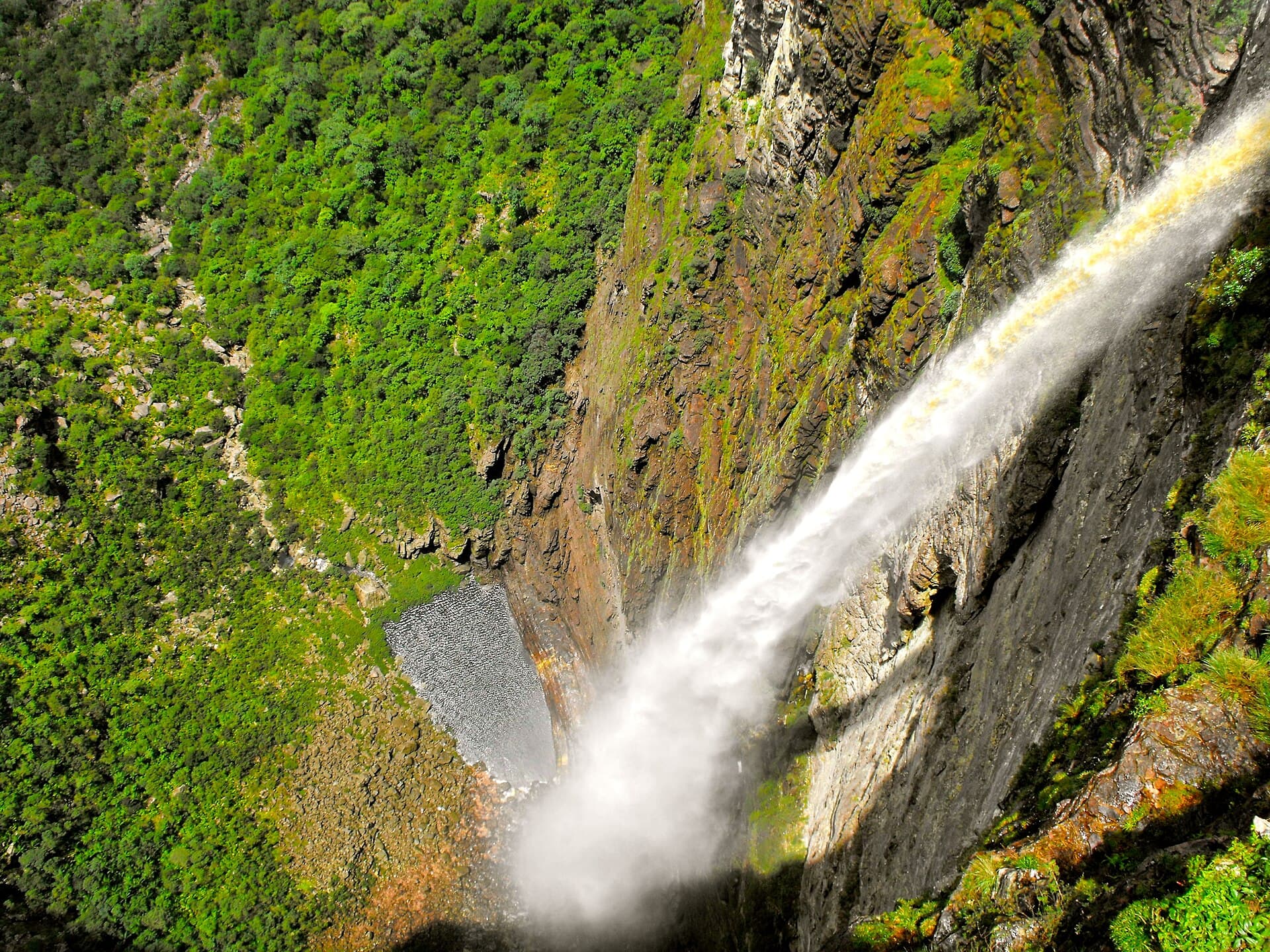
Inland, the Chapada Diamantina (250 km west of Salvador, 4h drive) is one of Brazil's most beautiful national parks — chain of tabular mountains with sandstone cliffs, vertiginous waterfalls (Cachoeira da Fumaça, 380 m, Brazil's 2nd highest free-falling waterfall), luminous caves (Poço Encantado, underground lake with turquoise waters illuminated by a sunbeam between April and August, one of South America's most spectacular sites), villages frozen in time (Lençóis, Mucugê, Igatu). More broadly, the Northeast includes Pernambuco (Recife and Olinda, traditional Carnival, UNESCO 1982), Ceará (Fortaleza, Jericoacoara, Canoa Quebrada — deserted beaches and lagoons), Rio Grande do Norte (Pipa, Natal), and Maranhão (Lençóis Maranhenses, white sand dunes dotted with turquoise lagoons, one of the world's most unique landscapes).
Explore Bahia
Spots in the region
Situation
Où se situe Bahia ?
Ouvrir la carte en grand sur OpenStreetMap →Frequently asked questions
Salvador, Recife or Fortaleza: which city to start the Northeast?+
Does Salvador Carnival match Rio's?+
Which beaches to choose in the Northeast?+
How many days for Chapada Diamantina?+
When to visit the Brazilian Northeast?+
Our verdict
Salvador and the Northeast is the authentic Afro-Brazilian soul of the country — the region where you'll discover Brazil's most mixed, rhythmic and historical dimension. Salvador's UNESCO Pelourinho (first colonial centre in South America) is an absolute must, ideally complemented by 3-4 nights at a Bahian beach (family Praia do Forte, relaxing Morro de São Paulo, luxury Trancoso) and 3 nights in Chapada Diamantina for the spectacular nature dimension. Travel from September to March (tropical dry season) to enjoy ideal climate and beaches. Avoid May-June (heavy rains). For Carnival (4 days late February-early March), Salvador offers a more authentic and popular experience than Rio (trios elétricos for 6 days, free access throughout the city). Respect safety rules in the historic centre (favour guided tours, don't walk at night outside very lively areas, keep passports in safe) — you'll discover one of the world's most vibrant and welcoming cultures.