Region
Tasmania
Tasmania is Australia's green island — 40% UNESCO nature reserves, Cradle Mountain alpine landscapes, iconic Wineglass Bay beach, MONA in Hobart (one of the world's most audacious contemporary art museums) and exceptional local gastronomy.
Tasmania (or simply Tassie for Australians) is the island south of the Australian continent — 68,401 km² (equivalent to Ireland), 570,000 inhabitants, separated from the mainland by the Bass Strait (240 km, famous for its storms). It is the smallest State, the historically youngest (penal colony 1803), the greenest (40% of surface in national parks and nature reserves, including the Tasmanian Wilderness UNESCO since 1982 — one of the world's last great temperate wilderness areas) and the most culturally European.
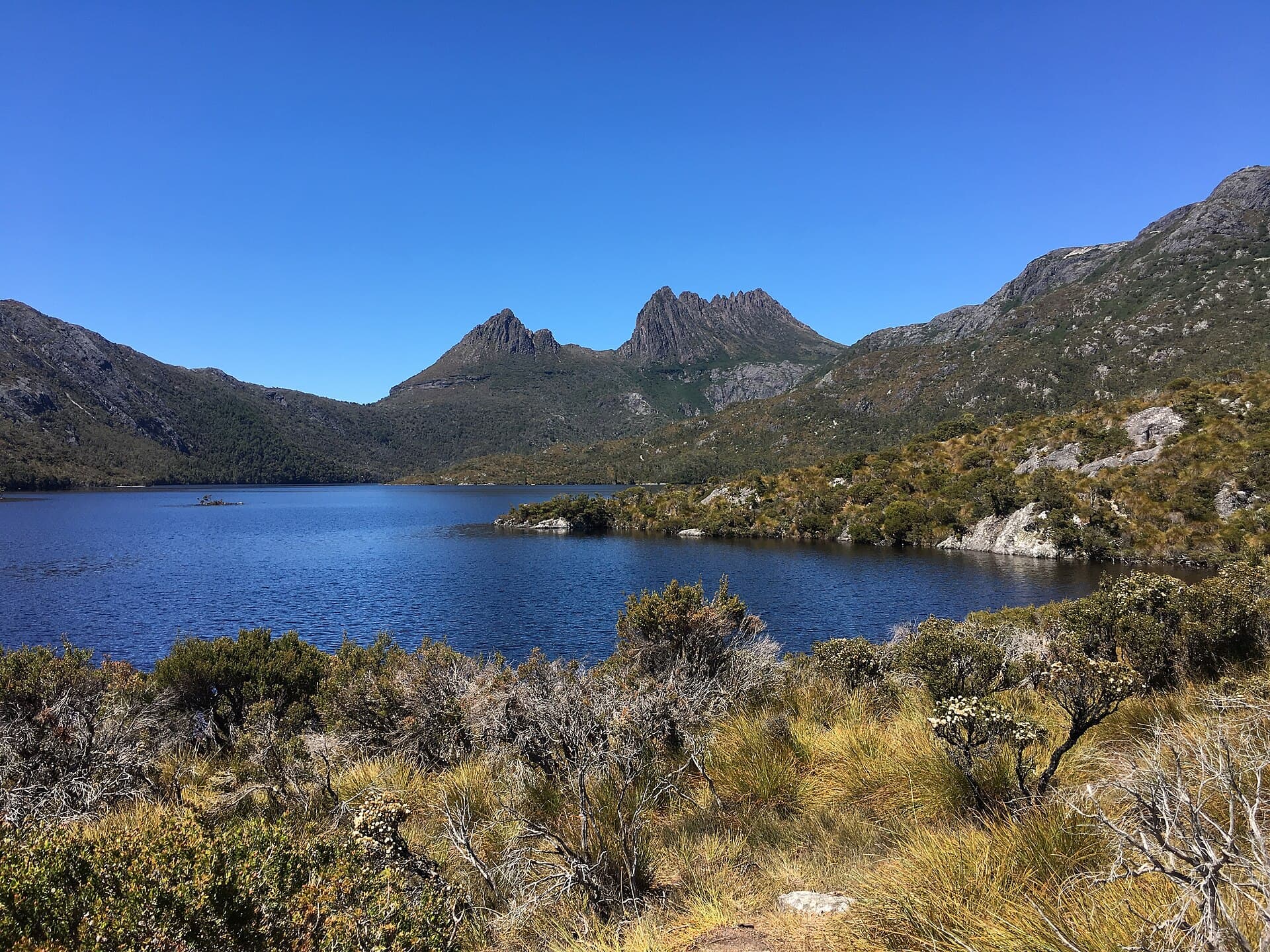
The temperate climate (similar to western Scotland or Ireland, with strong seasonality) and spectacular landscapes make it a radically different destination from the rest of Australia. Temperate rainforests (Tarkine in the north-west, 4th largest in the world), alpine mountains (Cradle Mountain 1,545 m, Mount Wellington 1,271 m overlooking Hobart), white sand beaches by turquoise waters (Wineglass Bay at Freycinet, Bay of Fires on the east coast), spectacular gorges (Cataract Gorge at Launceston), three quarters of the island covered in bush and eucalyptus forests.
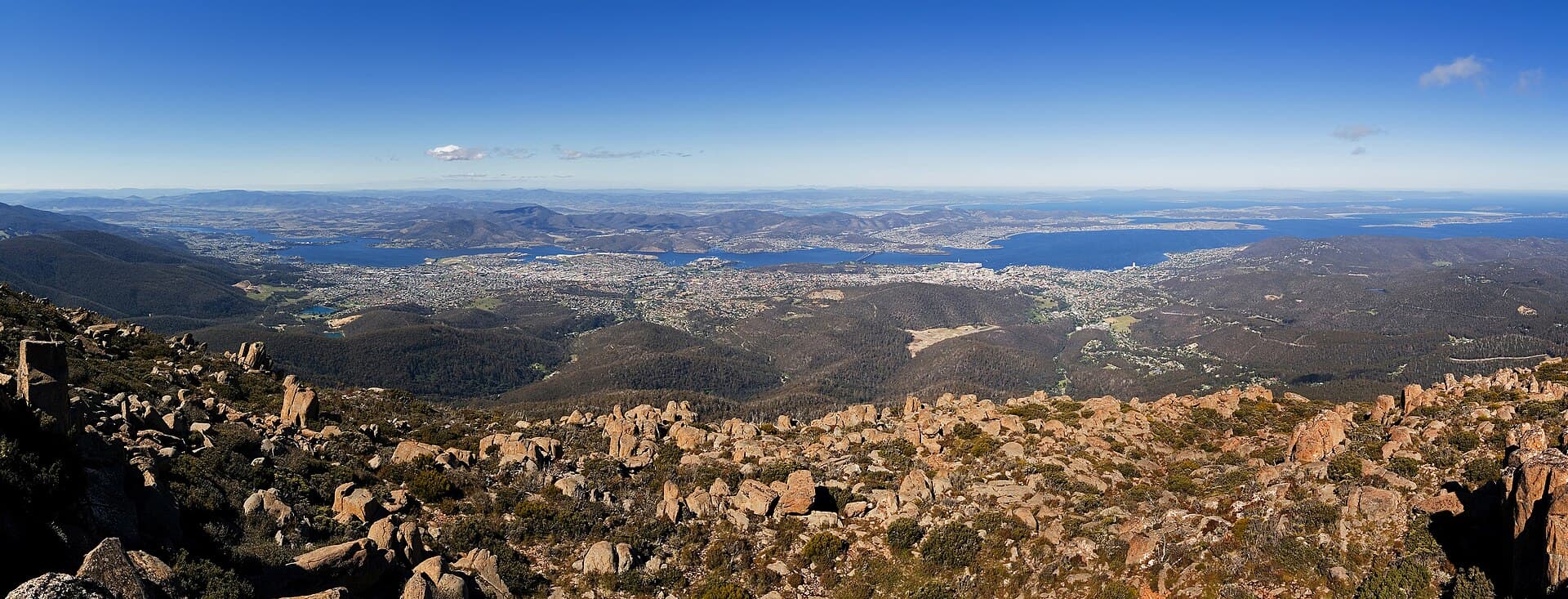
Hobart (250,000 inhabitants) is the capital and Australia's second oldest city (founded 1804, just after Sydney). Built at the foot of Mount Wellington (1,271 m, breathtaking panoramic view) on the banks of the Derwent River, it is a charming city with preserved British colonial architecture. The historic Battery Point neighbourhood (1830-1850) and the Salamanca Market (every Saturday since 1972, one of Australia's finest markets) are the classic attractions. But Hobart has radically transformed since 2011 with the opening of MONA — Museum of Old and New Art: contemporary art museum built by millionaire David Walsh, considered one of the world's most audacious and provocative. Accessible by ferry from the port (AUD 35 return, experience in itself), MONA offers a permanent collection and temporary exhibitions that have placed Hobart on the world contemporary art map. The Dark MOFO festival (June, austral winter) and MONA FOMA (January, summer) now attract an international crowd.
Cradle Mountain-Lake St Clair National Park (UNESCO) is Tasmania's natural jewel. Spectacular alpine landscapes (glacier lakes, jagged mountains, alpine eucalyptus forests), world-class hikes (Dove Lake Circuit 6 km easy, Cradle Mountain Summit 12 km difficult, legendary Overland Track 65 km in 6 days), endemic wildlife (Tasmanian devils, wombats, echidnas). Freycinet National Park (east coast) hosts the famous Wineglass Bay — champagne-glass shaped beach, white sand and turquoise water, considered one of the world's top 10 beaches. Bay of Fires (north-east coast) is a coastline of bright orange granite rocks and white sand beaches.
Tasmanian wildlife is unique. Tasmanian devils (Sarcophilus harrisii, endemic carnivorous marsupial, small dog size) are the island's official mascot — population threatened by a facial tumour disease (DFTD) that has decimated 80% of the wild species since 1996. Several sanctuaries (Devils @ Cradle, Bonorong, Trowunna) allow observation of these marsupials in conservation conditions. Wombats are frequently observable in national parks (Cradle Mountain notably). Fairy penguins can be seen at Bicheno and Bruny Island at sunset.
Tasmanian gastronomy is exceptional. Single malt whiskies among the world's best (Lark Distillery, Sullivans Cove French Oak which won the World Whisky Award in 2014), altitude Tamar Valley wines (Pinot Noir, Chardonnay, recognised champagne method), farmed salmon (Huon Aquaculture, Tassal), Bruny Island and Coal River Valley oysters, artisan cheeses (Pyengana Cheese), craft beers (Cascade Brewery — Australia's oldest, founded 1824). Lonely Planet ranked Hobart among the world's best gastronomic destinations in the 2010s.
Explore Tasmania
Spots in the region
Situation
Où se situe Tasmania ?
Ouvrir la carte en grand sur OpenStreetMap →Frequently asked questions
How many days for Tasmania?+
When is the best time for Tasmania?+
How to get to Tasmania from Sydney or Melbourne?+
What is MONA and why is it famous?+
Can you see wild Tasmanian devils?+
Our verdict
Tasmania is the ideal nature and gastronomy extension of an Australian trip for travellers with 4-6 weeks on site. Hobart deserves 2-3 nights for MONA, Battery Point, Salamanca Market and Mount Wellington. Cradle Mountain is the must-do hike (2-3 nights, Dove Lake Circuit, endemic wildlife). Freycinet National Park (Wineglass Bay) requires 2 nights minimum. For a complete 7-10 day stay, add the Tamar Valley (wineries) and Launceston (Cataract Gorge), or Bruny Island (oysters, whisky, penguins). Prioritise austral summer (December-February) or autumn (March-April, spectacular foliage). Direct Sydney-Hobart flight 1h45 (AUD 200-400 return), car rental essential on site.