Mowando

Region

Porto and North

The northern capital and its hinterland: the Douro River snaking between staircase vineyards, the quintas where Port wine is born, and the medieval towns where Portuguese history began.

4.80

Porto and Northern Portugal form one of the most authentic and least-touristed regions in Western Europe, far from the mass flows reshaping other Iberian destinations. Porto, UNESCO-listed for its Douro waterfront, is a city of character — steep, working-class, azulejo-covered and driven by a food scene in full effervescence that pairs tradition (the francesinha, caldo verde) with sharp modern energy (dozens of newly acclaimed restaurants).

The Douro Valley, two hours by road or train from Porto, is one of the most spectacular landscapes in Europe. The terraced vineyards, carved into schist since the eighteenth century, climb the riverbanks for 200 km, producing the grapes that become Port wine. The quintas — traditional wine estates — open their doors to visitors for tastings and exceptional guesthouse stays. In September, the harvest transforms the valley into a living festival, with feet in the lagares and singing in the cellars.

To the north, the Minho reveals an even more archaic Portugal: the medieval lanes of Guimarães, considered the cradle of the nation ('aqui nasceu Portugal' — here Portugal was born — proclaims its castle), the baroque sanctuary of Bom Jesus at Braga and the low-trained vines of vinho verde, the slightly sparkling white wine produced amid the absolute greenery of the region.

Spots in the region
Situation

Où se situe Porto and North ?

Ouvrir la carte en grand sur OpenStreetMap →

Frequently asked questions

How many days do you need to visit Porto and Northern Portugal?+
Plan for a minimum of five to seven days for a balanced experience: two days in Porto (Ribeira, Bonfim, Vila Nova de Gaia lodges, Livraria Lello), one to two days in the Douro Valley (cruise or quinta road trip), one day in Guimarães and one day in Braga. With ten days you can add deeper Minho coverage (Viana do Castelo, Ponte de Lima) and trails in Peneda-Gerês National Park.
What is a francesinha and where should you eat one in Porto?+
The francesinha is Porto's signature sandwich: cured meats (linguiça, presunto, steak) layered between slices of white bread, blanketed in melted cheese and drenched in a spicy, smoky beer-and-tomato sauce, served with chips. It is heavy, flavourful and non-negotiable. The best addresses in Porto: Café Santiago (Rua Passos Manuel), Bufete Fase (Rua do Bonjardim) and A Regaleira (Rua do Bonjardim). Avoid the tourist versions on the Ribeira quayside.
How do you visit the Douro Valley from Porto?+
Three options depending on your budget and pace. The __train__ from Porto São Bento to Régua (2h45, around €14 return) follows the river for part of the route — a journey in itself. A __day cruise__ from Porto (€80-120) gives a panoramic river experience. A __hire car__ is the most flexible option for stopping at quintas and exploring at your own pace — allow two hours from Porto to the heart of the Douro Superior. For the harvest (mid-September to mid-October), book months in advance.
Why is Guimarães called the cradle of Portugal?+
Afonso Henriques, the first king of Portugal, was born in Guimarães in 1109, and the Battle of São Mamede (1128) — the first great victory of what would become the Kingdom of Portugal — was fought nearby. The city preserves its medieval castle (Castelo de Guimarães), the Paço dos Duques de Bragança and a UNESCO-listed historic centre. The inscription 'Aqui nasceu Portugal' (Here Portugal was born) on the battlements sums up the city's symbolic importance to national identity.
What is vinho verde and what is its connection to the region?+
Vinho verde (literally 'green wine' — referring to its youth, not its colour) is a slightly sparkling white wine of low alcohol (8-12%) and bright acidity, produced in the Vinho Verde demarcated region covering most of northern Portugal (Minho and part of the Douro). It is best served very cold in summer alongside seafood. The region also produces interesting, lesser-known red vinho verde. Try them in Braga's tasques or in the wine shops of Ponte de Lima.
Can you walk the Camino de Santiago from Porto?+
Yes, Porto is a major staging post on the __Camino Português__ (Portuguese Way), one of the pilgrimage routes to Santiago de Compostela. The Sé cathedral in Porto issues the credencial (pilgrim passport). From Porto to Santiago de Compostela via the central route is approximately 227 km (10-14 days on foot). The coastal variant (Camino Português da Costa), which follows the Atlantic through Viana do Castelo, is particularly scenic. The best seasons are May-June and September.
Are the Port wine lodges in Porto or in Vila Nova de Gaia?+
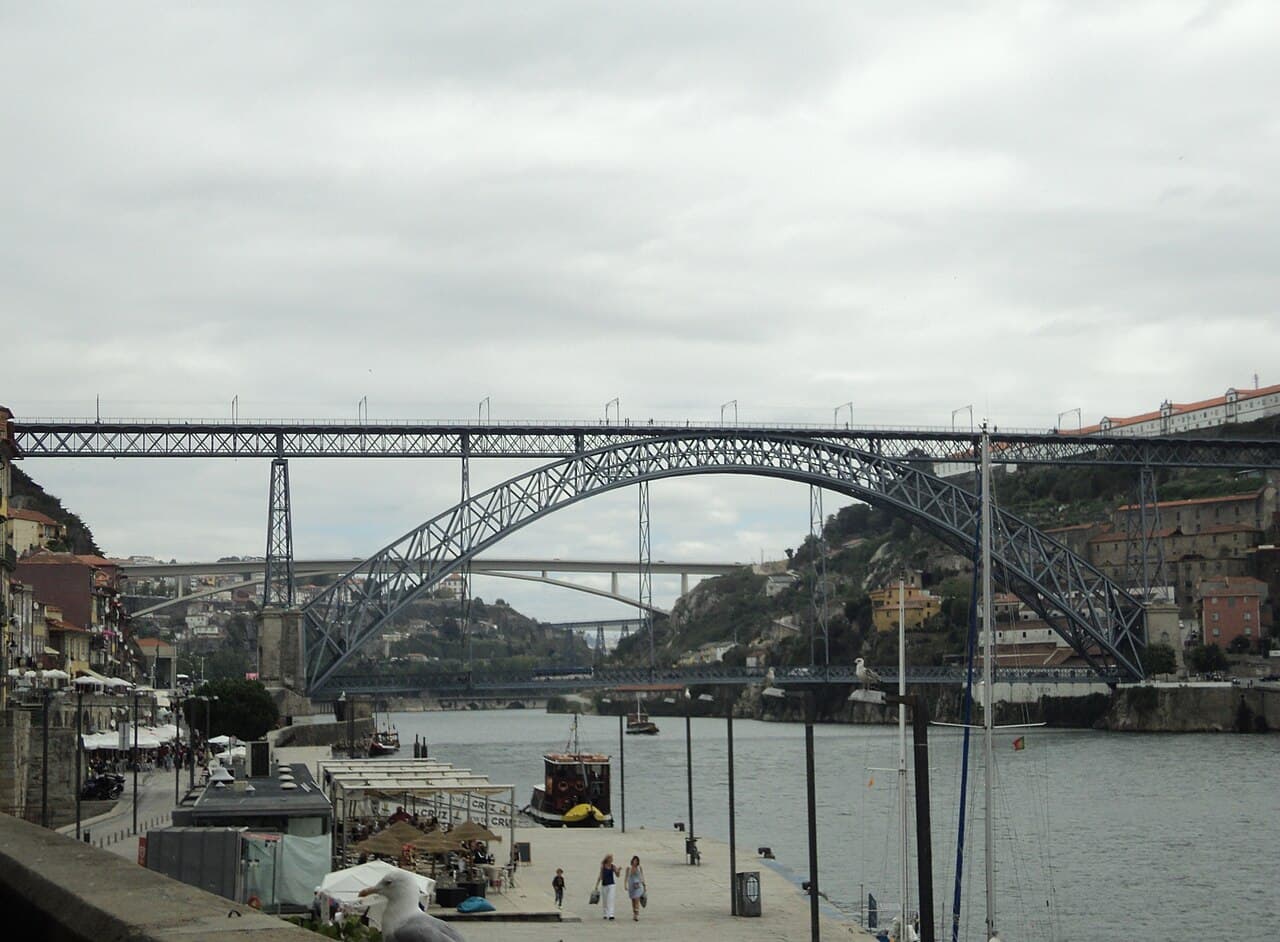
The major Port wine ageing cellars (lodges) are almost all located in __Vila Nova de Gaia__, on the south bank of the Douro opposite Porto. The Dom Luís I bridge connects them to the Ribeira in a ten-minute walk. Taylor's, Graham's, Sandeman, Ramos Pinto and Ferreira all offer guided cellar tours and tastings. Port wine is produced in the Douro Valley, then shipped downriver on barcos rabelos (traditional flat-bottomed boats) to the Vila Nova de Gaia lodges to age. Allow two to three hours for a full visit with tasting.

Our verdict

Porto and Northern Portugal are the ideal destination for travellers who want to understand Portugal in its depths — not just its tourist façade. The city of Porto is one of Europe's most loveable, at once working-class and cool, melancholy and festive. The Douro Valley is a spectacle in itself, best seen in September during the harvest or in spring when the vines are coming back to life. Dedicate at least five days to the region: two in Porto, one night in a Douro quinta and a day in Guimarães.

Mowando Letter

Once a month: the right destinations for the right season + the best booking windows.

No spam. One-click unsubscribe. Your data is never shared.