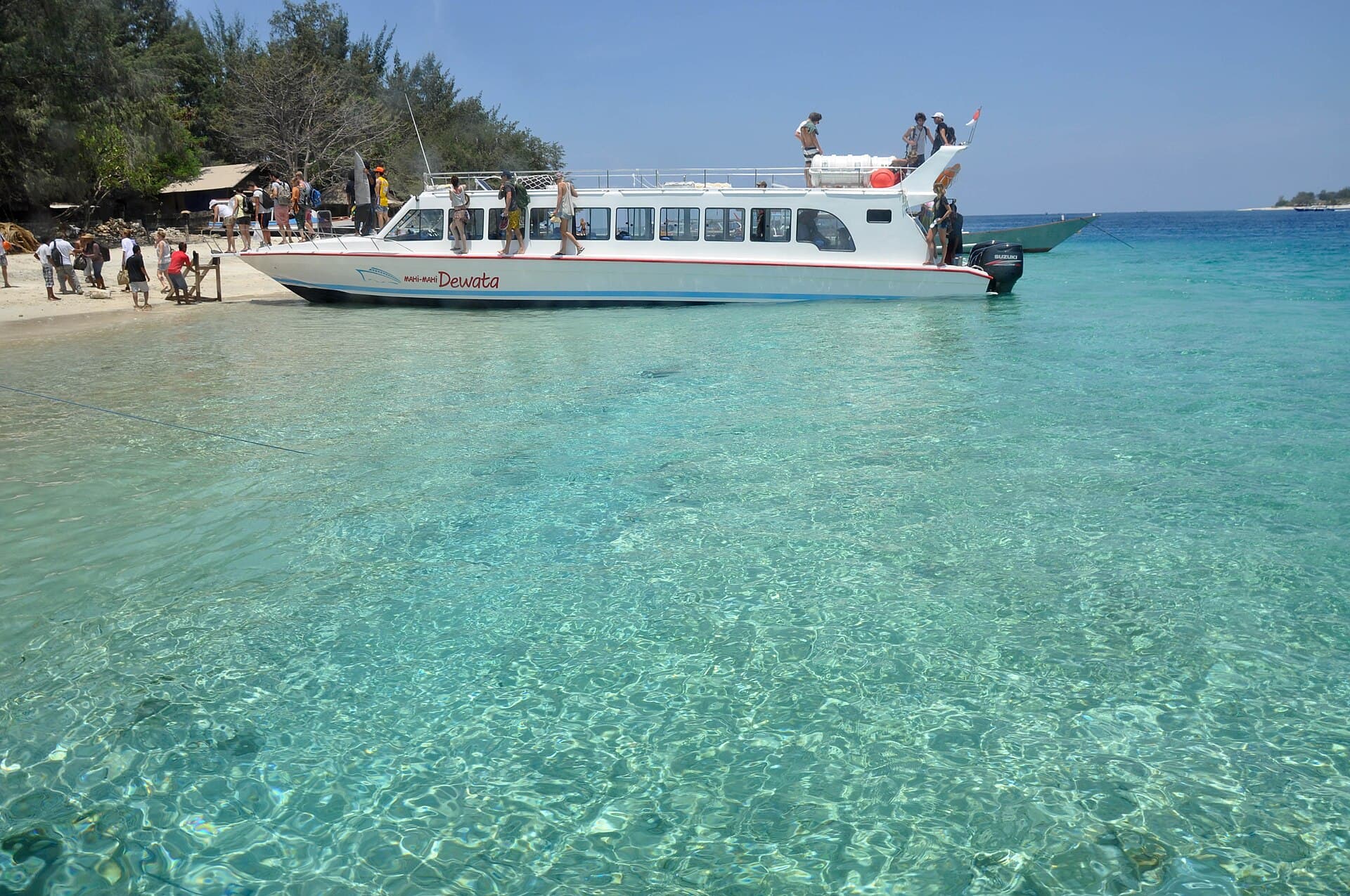
The central activity on Gili Trawangan is diving and snorkelling, and the island is considered by many divers as one of the best price-to-quality ratios in Southeast Asia. Turtle Point (the north-east coast) is the most famous snorkelling site: green and hawksbill turtles graze on the seagrass beds within metres of the shoreline, with no boat trip required. Pick up a mask and snorkel set (30,000-50,000 IDR per day), walk to the north-east of the island, and the turtle sightings are practically guaranteed in the dry season.
For scuba divers, the sites around the Gilis rank among the best in Indonesia outside Raja Ampat and Komodo. Shark Point off Gili Meno (accessible by boat from Gili Trawangan) is known for the white-tipped reef sharks that patrol the area regularly. Halik's Reef and the Bounty Wreck (a sunken party boat turned reef) offer colourful marine life. Manta rays show up occasionally in the channel currents in May-June. Several dozen PADI dive schools operate on the island — competition keeps the prices reasonable.
Beyond diving, the bike loop around the island (45 minutes) is one of the simplest pleasures in Indonesia. The east coast is the busiest stretch (restaurants, bars, night markets); the west coast is calmer and delivers the best sunsets, facing Bali. The northern coast, less frequented, has beautiful white-sand beaches with Mount Rinjani as a backdrop. Island-hopping to the two neighbours (Gili Meno in 10 minutes, Gili Air in 15) rounds out the offer: public boats run for 15,000-25,000 IDR or private speedboats for more.
The beaches deserve attention based on your mood. The eastern beach of Gili Trawangan, facing Lombok, is the busiest: a long stretch of pale sand lined with thatched-roof restaurants, sun loungers and snorkel-gear stalls. This is where the atmosphere is concentrated, with vibrant night markets in the evening. The northern beach is quieter, ideal for swimming in shallow water — also the best angle for photographing Mount Rinjani in the early morning. The western beach delivers the island's most spectacular sunsets, facing Bali: settle into a beanbag in late afternoon with a fresh coconut and watch the red disc drop into the Indian Ocean.
The nightlife on Gili Trawangan is its own experience, for travellers who want it. The island has no curfew and music in some east-coast beach bars can run well past midnight, particularly in July-August. Several venues host themed nights with DJ sets, bonfires on the beach and informal parties. For a quieter evening, the northern beach restaurants serve grilled fish over open fires in a calm setting, with the sound of waves and a sky free of light pollution — the stars over Gili Trawangan, far from any continental glow, are genuinely impressive.
Wellness travellers will find their thing too: several spas run Balinese massage sessions (200,000-350,000 IDR per hour), open-air yoga classes facing the sea and tropical-oil treatments. Some dive schools also offer night snorkelling — a different kind of underwater experience where octopus, lionfish and moray eels come out under cover of darkness. A memorable add-on for seasoned snorkellers.
Read also
- Lombok, the wild island — 30 minutes by boat: Mount Rinjani, the southern beaches and Sasak culture.
- Lombok and the Gili Islands — Complete regional guide: Gili Trawangan, Lombok and the Rinjani trek.
- Canggu, Bali — Two hours by boat: surf and creative cafés on Bali's west coast.
- Indonesia — Complete archipelago guide: visa, budget and unmissable islands.