
Mowando

Region

Castile and Madrid

The Castilian heart of Spain: Madrid and its world-class museums, the medieval cities of Toledo and Segovia, Salamanca and the epic landscapes of La Mancha.

4.80

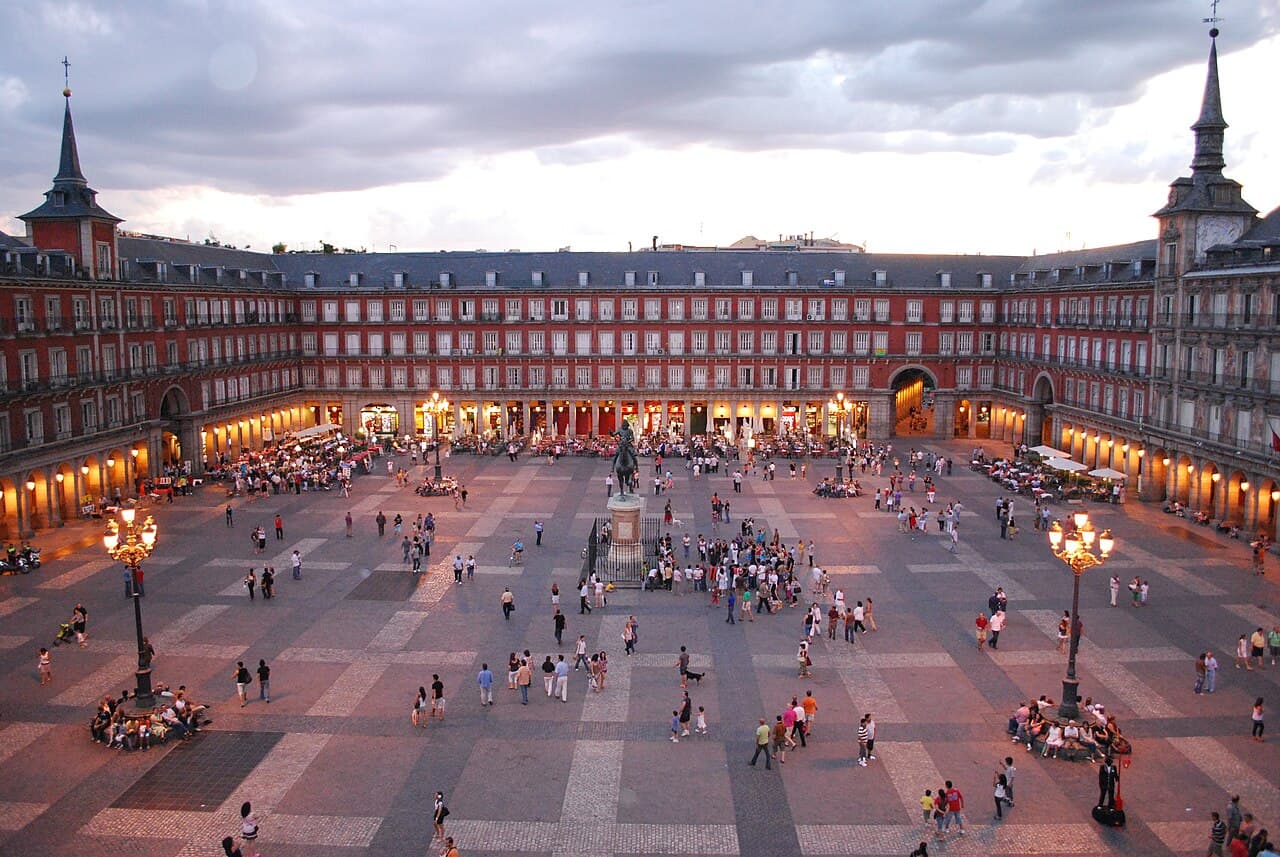
Madrid and Castile form the geographical and cultural heart of Spain. Set on the Meseta plateau at 660 metres above sea level — the highest capital in Europe — Madrid is a perpetually energised metropolis, celebrated for its golden triangle of museums (the Prado, the Reina Sofía, the Thyssen-Bornemisza), its generous gastronomy, its nights that never seem to end, and a joy of living that spills onto the terraces of the Plaza Mayor and into the tapas bars of La Latina's backstreets.

But Castile's greatness also lies in its satellite cities, each an open history book: Toledo, the City of Three Cultures where Christians, Jews and Muslims coexisted through the Middle Ages in a masterpiece of composite architecture; Segovia with its two-tiered Roman aqueduct, 2,000 years old and still standing; Salamanca, the golden sandstone city whose baroque Plaza Mayor many travellers consider the finest in Spain; Aranjuez, Spain's answer to Versailles. And beyond these cities, the infinite plain of La Mancha, dotted with windmills that seem to have stepped straight out of Cervantes's novel.

Spots in the region
Situation

Où se situe Castile and Madrid ?

Ouvrir la carte en grand sur OpenStreetMap →

Frequently asked questions

How many days do you need in Madrid and Castile?+
Plan for at least four to five days for Madrid alone if you want to do the Prado, Reina Sofía and Thyssen justice, with time left for tapas and neighbourhood life. With seven to ten days, add Toledo (day trip or overnight stay), Segovia (day trip from Madrid), Salamanca (one night) and, if the Don Quixote theme appeals, a loop through La Mancha to see the windmills of Campo de Criptana.
Is Toledo worth the trip from Madrid?+
Absolutely. Toledo is 30 minutes from Madrid-Atocha by AVE — one of the most accessible and heritage-rich excursions in Europe. The old city is UNESCO-listed in its entirety. Arrive early in the morning to see the cathedral and El Greco collections before the tour groups descend. Consider staying overnight to enjoy the city in the calm of evening and at first light — Toledo at dawn is a different city entirely.
What is cocido madrileño?+
__Cocido madrileño__ is the emblematic dish of traditional Madrid home cooking: a generous chickpea stew with vegetables, ham, chorizo and various meats, slow-simmered and served in three courses (vuelcos) — first the broth with vermicelli noodles, then the chickpeas and vegetables, finally the meats. A quintessentially winter dish, served in the traditional restaurants of La Latina and Lavapiés. Come hungry and plan an afternoon of rest.
Where to eat the best tapas in Madrid?+
The __La Latina__ neighbourhood (Cava Baja and Cava Alta streets) is the heartland of classic Madrid tapas: tortilla española, patatas bravas, jamón croquetas, grilled ear. __Malasaña__ offers a more creative spin on tapas. For market-style eating, the __Mercado de San Miguel__ (pricey but iconic) and the __Mercado de San Antón__ in Chueca both have excellent selections. On Sunday at midday, the ritual of vermut (anise-based aperitif) with tapas at the counter of the old La Latina bars is an experience in itself.
Is Segovia's aqueduct really Roman?+
Yes — and it is one of the best-preserved Roman engineering feats in the world. Built in the 1st or 2nd century AD (the exact date is still debated by archaeologists), Segovia's aqueduct is 728 metres long, has 167 arches on two tiers and rises to 28 metres in height — all built in granite, with no mortar or cement. It delivered water from the Sierra de Guadarrama to the hilltop city until the 20th century.
Which museums should you not miss in Madrid?+
The __Museo del Prado__ is the absolute priority — its collection of Spanish (Velázquez, Goya, Ribera) and Flemish (Bosch, Rubens, Titian) paintings is among the top three or four in the world. Allow a full half-day minimum. The __Museo Reina Sofía__ houses Picasso's Guernica and Spain's leading 20th-century modern art collection. The __Museo Thyssen-Bornemisza__ completes the triangle with its encyclopedic survey from Flemish primitives to 20th-century masters. All three are within a few hundred metres of each other along the Paseo del Prado.
Tapas or pintxos — what is the difference?+
__Tapas__ (the Madrid and south-central Spanish tradition) are small portions of food served on plates or skewered with toothpicks — sometimes offered free with drinks in some regions (Granada, Jaén, Almería). __Pintxos__ (the Basque and northern Spanish tradition, also spelled pinchos) are small morsels placed on slices of bread and fixed with a cocktail stick. In Madrid, tapas culture dominates, but you'll find pintxos in the Basque-style bars of the Arganzuela and Salamanca neighbourhoods.

Our verdict

Madrid and Castile reward curious travellers who look beyond the clichés. The Prado alone justifies the trip, but it is in the late-night lanes of La Latina, the tapas markets east of the Retiro and the golden sandstone towns of the Meseta that the real Castilian Spain reveals itself. Come in April-May or September-October for pleasant weather, and reserve at least two days in Madrid to absorb the Prado before fanning out to Toledo, Segovia and Salamanca. Castile is a destination for travellers who appreciate historical and cultural depth that builds slowly — and it lingers long after you leave.

Mowando Letter

Once a month: the right destinations for the right season + the best booking windows.

No spam. One-click unsubscribe. Your data is never shared.