Mowando

Region

Sinai Peninsula

The crossroads of the three monotheistic religions and one of the world's best diving spots: from the Blue Hole of Dahab to the reefs of Ras Mohammed, from Mount Sinai where Moses received the Tables of the Law to the oldest Orthodox monastery still active.

4.70

The Sinai Peninsula — a 61,000 sqkm triangle wedged between the Mediterranean to the north, the Red Sea to the south, the Gulf of Suez to the west and the Gulf of Aqaba to the east — is one of Egypt's most singular destinations. More than a simple tourist region, it is a geographical, religious and cultural crossroads of major historical importance: the peninsula bears the traces of the biblical Exodus (the Israelites led by Moses from Egypt to Canaan, around the 13th century BC), of the Decalogue given to Moses on Mount Sinai, and of primitive Orthodox monasticism with Saint Catherine's Monastery (6th century, the oldest Christian monastery still active in the world).

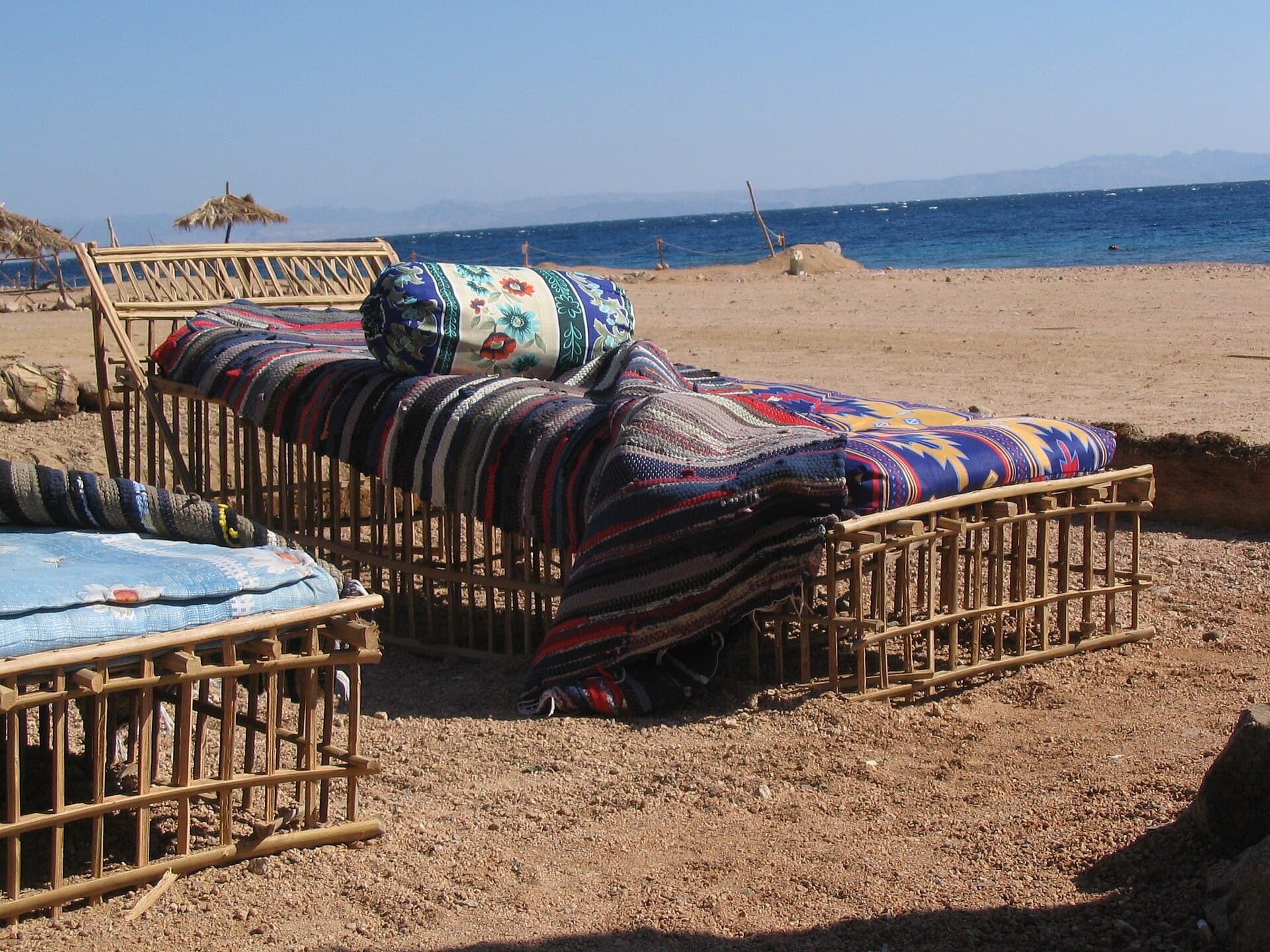
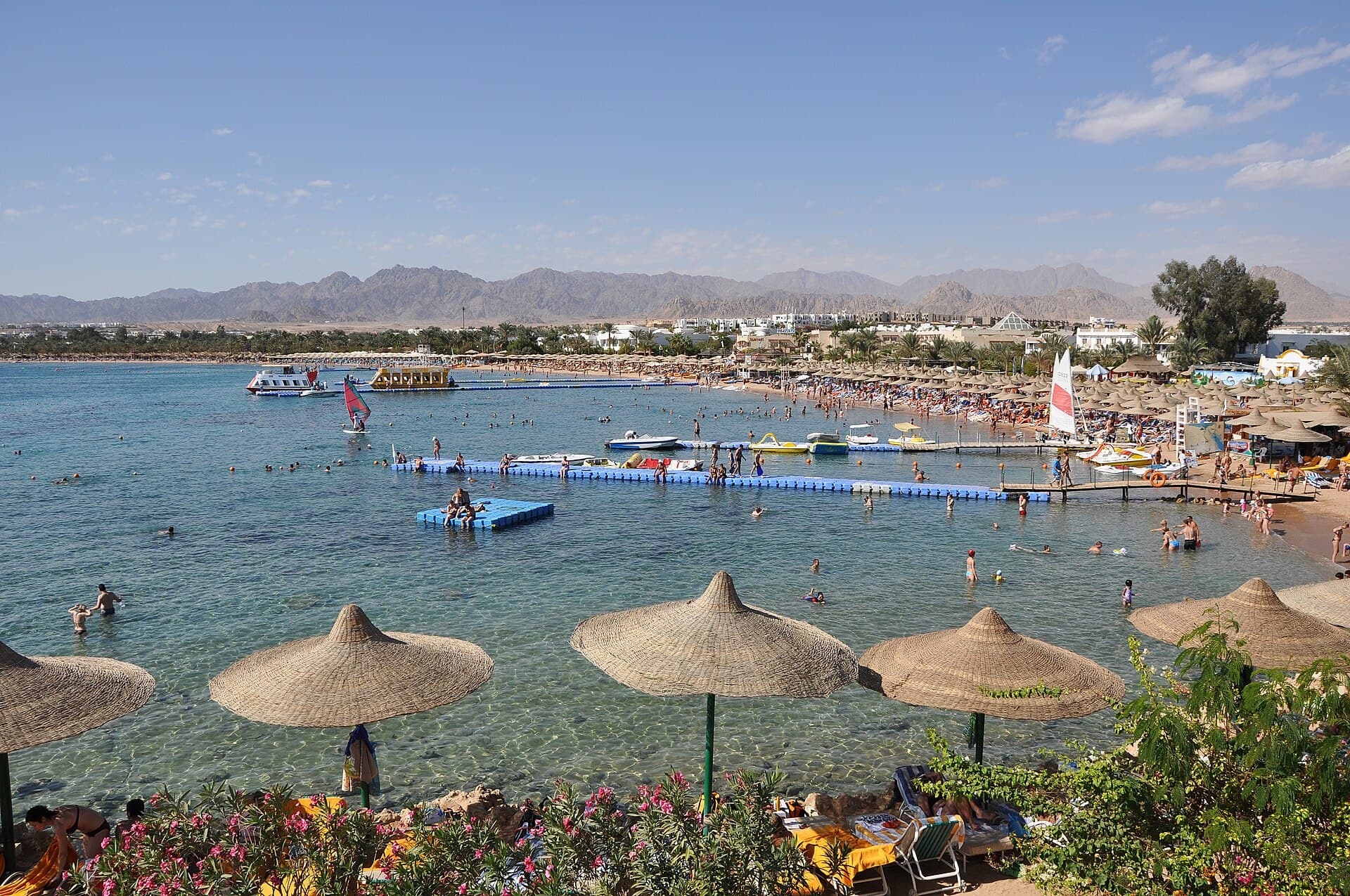
The southern coast of Sinai, on the Gulf of Aqaba, has become since the 1990s one of the best beach and diving destinations in the world. Sharm el-Sheikh (75,000 inhabitants), created ex nihilo in the 1980s, is now the flagship resort — 300+ hotels and resorts, international airport, world-class diving at Ras Mohammed (national park, one of the most beautiful diving spots in the world) and at the Strait of Tiran (four reefs Jackson, Woodhouse, Thomas and Gordon, vertical wall to 100 m depth, sharks, manta rays). Further north, Dahab (15,000 inhabitants), an ancient Bedouin village turned international diving and kitesurfing spot, charms with its backpacker atmosphere and its legendary Blue Hole (vertical gulf of 130 m depth, one of the most mythical and dangerous diving sites in the world). Nuweiba and Taba, on the Israeli border, are quieter and host a niche tourism (Bedouin seaside camps, paddle, meditation).

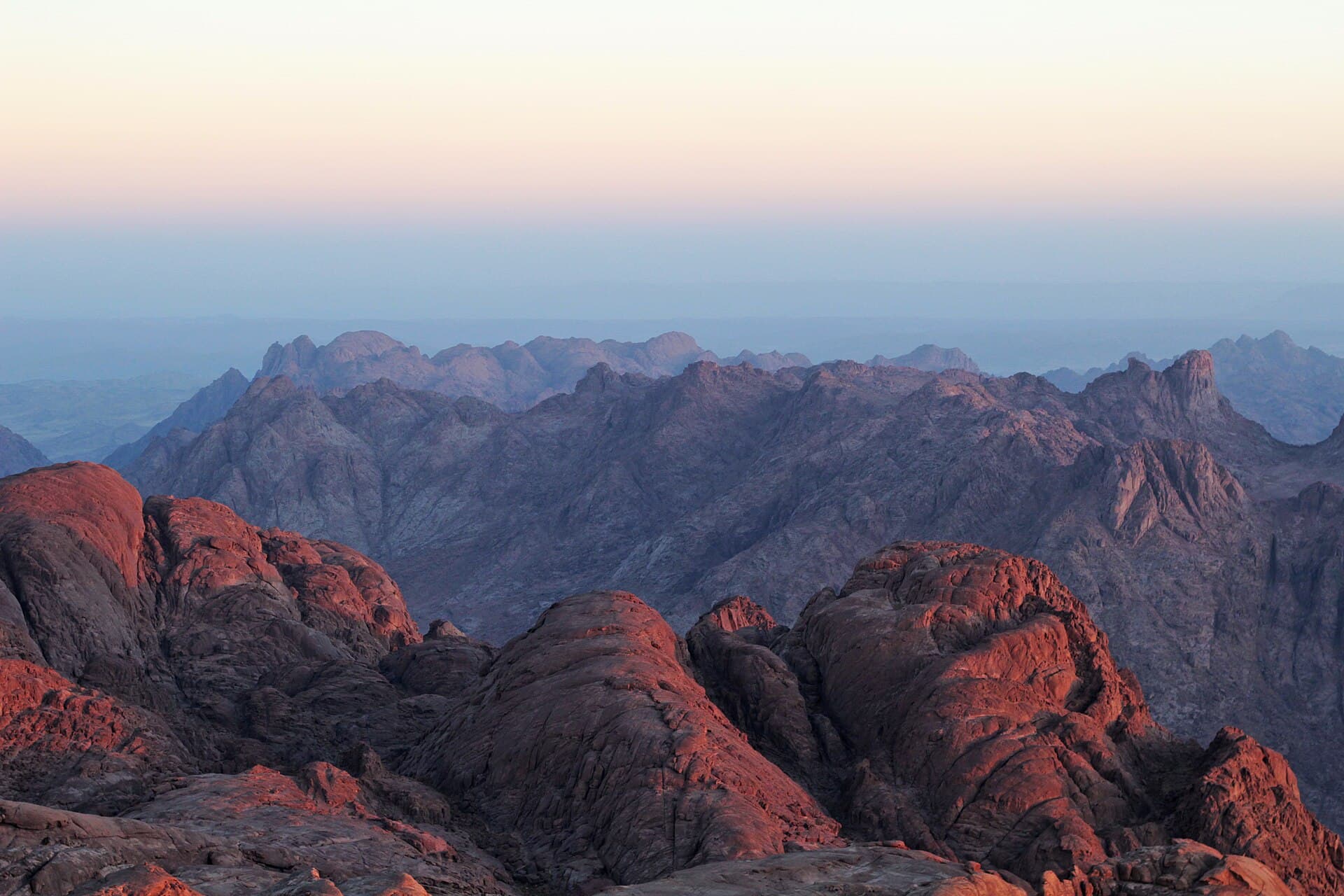
The interior of Sinai is dominated by red and black granite mountainsMount Sinai (Jebel Musa, 2,285 m, where according to tradition Moses received the Tables of the Law) and Mount Saint Catherine (Jebel Katherina, 2,642 m, highest point of Egypt). At the foot of Mount Sinai, Saint Catherine's Monastery (founded in 548 by the Byzantine emperor Justinian) is an invaluable heritage treasure — library of 3,300 ancient manuscripts (the second largest in the world after that of the Vatican), Basilica of the Transfiguration with exceptional Byzantine mosaics, Chapel of the Burning Bush (place where according to tradition Moses saw the divine apparition). The monastery is UNESCO-listed and belongs to the Greek Orthodox Church.

Important: since late 2023, access to Saint Catherine's Monastery and Mount Sinai is restricted and generally requires going through an accredited operator with escort. Egyptian authorities have carried out since 2024 controversial development works around the monastery (construction of hotels and roads by the 'Great Transfiguration' project), creating tensions with the Orthodox Church. Check access conditions with your operator before planning this visit. The areas of Sharm el-Sheikh, Dahab, Nuweiba and Taba (south Sinai) remain accessible with a free 15-day Sinai visa issued on arrival at the airport — but this visa does not allow visits to Giza, Luxor or the pyramids.

Explore Sinai Peninsula

Spots in the region
Situation

Où se situe Sinai Peninsula ?

Ouvrir la carte en grand sur OpenStreetMap →

Frequently asked questions

What is the Sinai visa and how to obtain it?+
The __Sinai visa__ is a free entry permit issued on arrival at Sharm el-Sheikh airport (SSH) or at the border posts of Taba (from Israel), Nuweiba (ferry from Jordan). It allows a stay of __15 days maximum__ and is geographically limited to the __coastal area of south Sinai__: Sharm el-Sheikh, Ras Mohammed, Dahab, Nuweiba, Taba, Saint Catherine's Monastery. It __does not allow__ visits to Giza, Cairo, Luxor or other regions of Egypt. To combine Sinai + pyramids, take the __national visa__ (e-visa $25 USD, valid 30 days, accessible on visa2egypt.gov.eg). The Sinai visa is ideal for travellers coming only for diving or hiking on Mount Sinai.
Is Saint Catherine's Monastery currently accessible?+
__Access is restricted since late 2023__. Saint Catherine's Monastery (6th century, the oldest Christian monastery still active, UNESCO-listed) remains open to visitors, but generally requires going through an __accredited operator with escort__. Egyptian authorities launched in 2024 a controversial development project ('Great Transfiguration') around the monastery — construction of hotels, roads and shopping centres — creating tensions with the Orthodox Church which fears for the site's integrity. Check access conditions with your operator (Memphis Tours, Egypt Explorers, Sinai Trail) at the time of booking. The ascent of Mount Sinai (Jebel Musa, 2,285 m) remains possible but subject to the same conditions — nocturnal departure around 2am for sunrise at the summit at 6am.
Sharm el-Sheikh or Dahab: which to choose?+
It depends on your profile. __Sharm el-Sheikh__ (75,000 inhabitants, 300+ resorts) is the flagship resort — direct charter flights from Paris (4h30 by Transavia, Corendon), 4-5 star all-inclusive resorts at affordable prices, direct access to __Ras Mohammed National Park__ (one of the best diving spots in the world) and to the __Strait of Tiran__. Practical and comfortable, but without architectural charm. International family atmosphere. __Dahab__ (15,000 inhabitants, 80 km north of Sharm el-Sheikh, 1h by taxi) is the old Bedouin version — very relaxed backpacker atmosphere, seaside camps, world-class kitesurfing at Dahab Lagoon, access to the mythical __Blue Hole__ and __Canyon__. Much lower prices than Sharm el-Sheikh, but simpler accommodation (hostels, small hotels, Bedouin camps). For __diving__: Sharm el-Sheikh for Ras Mohammed and Tiran, Dahab for the Blue Hole and the local diving atmosphere.
Is the Blue Hole of Dahab really dangerous?+
Yes, the __Blue Hole__ (vertical gulf of 130 m depth, 8 km north of Dahab) is considered one of the __most dangerous diving sites in the world__ — about 200 divers have lost their lives there since the 1990s, mainly attempting the freedive or scuba passage of the 'Arch' (tunnel at 56 m depth connecting the Blue Hole to the open sea). The risk comes from __nitrogen narcosis__ (psychotropic effect at depth, loss of judgement) and __rapid air consumption__ at great depth. __Safe__ diving is however quite possible: descent along the outer wall to a maximum of 30 m (Open Water Advanced), spectacle of abyssal verticality and fauna (squirrelfish, giant groupers, green turtles, occasional sharks). __Never attempt the Arch__ without Tek training and stage oxygen. Snorkelling at the Blue Hole is also magical — glassy surface, dive towards the absolute blue.
Should you climb Mount Sinai?+
Yes, it is one of the __most emblematic experiences in Egypt__, regardless of your beliefs. Mount Sinai (Jebel Musa, 2,285 m) is, according to Jewish and Christian tradition, the place where __Moses received the Tables of the Law__ (around the 13th century BC). Classic ascent: departure at __2am__ from Saint Catherine's Monastery (1,570 m altitude) to reach the summit (2,285 m) before sunrise (5.30-6am depending on the season). Two paths: the __pilgrims' path__ (Sikket Sayidna Musa, 3,750-step staircase carved into the rock, shorter but steeper, 2h30 ascent) or the __camel track__ (Sikket El Bashait, 7 km, 3h ascent, possibility to ride a camel up to 300 m from the summit). At the summit, 360° view over the Sinai mountains, Orthodox chapel and mosque. __Sunrise__ from the summit is an almost mystical moment. Descent in 1h30-2h. Water, headlamp and warm fleece essential (summit at 0-10 °C at night all year round).
What are the best Sinai diving sites?+
Three world reference zones. 1) __Ras Mohammed__ (national park, 30 km south of Sharm el-Sheikh): one of the most beautiful diving sites in the world — pristine reefs, vertical wall, exceptional biodiversity. Emblematic dives: Shark Reef, Yolanda Reef (with the SS Yolanda wreck and its sanitary fixtures scattered on the reef), Anemone City. 2) __Strait of Tiran__ (between Sharm el-Sheikh and Saudi Arabia): four aligned reefs (Jackson, Woodhouse, Thomas, Gordon), vertical walls to 100 m depth, hammerhead and thresher sharks in autumn, manta rays. Boat access from Sharm el-Sheikh (1h sailing). 3) __Blue Hole and Dahab Canyon__: coastal sites accessible on foot from Dahab (taxi 10-15 min). The Blue Hole for its vertiginous setting, the Canyon for its passages through a unique coral formation. For expert divers, do not miss the __Thistlegorm wreck__ (British cargo sunk in 1941, accessible by 2-3 day cruise from Sharm el-Sheikh).
Is Sinai safe for tourists?+
The __coastal area of south Sinai__ (Sharm el-Sheikh, Dahab, Nuweiba, Taba) is __considered safe__ by the French Ministry of Foreign Affairs and is protected by a visible police and military presence. The main risks are __tourist scams__ and __dives with uncertified centres__ (check PADI/SSI and equipment condition). On the other hand, __North Sinai__ (beyond Nuweiba towards the north-east) is __formally inadvisable__ — active terrorism risk (groups affiliated with the Islamic State), militarised zone. The road between Sharm el-Sheikh and Saint Catherine's Monastery passes through frequent military checkpoints — always prefer __accredited operators__ and __private transfers organised__ by your hotel. Avoid land transit from or to Israel outside the official Taba border post. No major problems are reported in the classic tourist areas of the south.

Our verdict

The Sinai Peninsula is one of the most complete and spiritual destinations in Egypt. It combines some of the world's best diving sites (Ras Mohammed, Strait of Tiran, Blue Hole), an exceptional religious heritage (Saint Catherine's Monastery, Mount Sinai), and the singular atmosphere of Bedouin camps of Dahab and Nuweiba. For divers, choose Sharm el-Sheikh (all-inclusive resorts, access to the best spots, direct charter flights from Paris) or Dahab (backpacker atmosphere, Blue Hole, low prices). For pilgrimage, organise your visit to Saint Catherine's Monastery and Mount Sinai exclusively via an accredited operator (escort currently mandatory). Visit from March to May or September to November for optimal conditions (air 24-28 °C, water 25-27 °C). The free 15-day Sinai visa considerably simplifies formalities, but does not allow visits to the rest of Egypt — for a combined Giza + Sinai trip, take the national visa (e-visa $25 USD).

Mowando Letter

Once a month: the right destinations for the right season + the best booking windows.

No spam. One-click unsubscribe. Your data is never shared.