Region
Iguazu & South
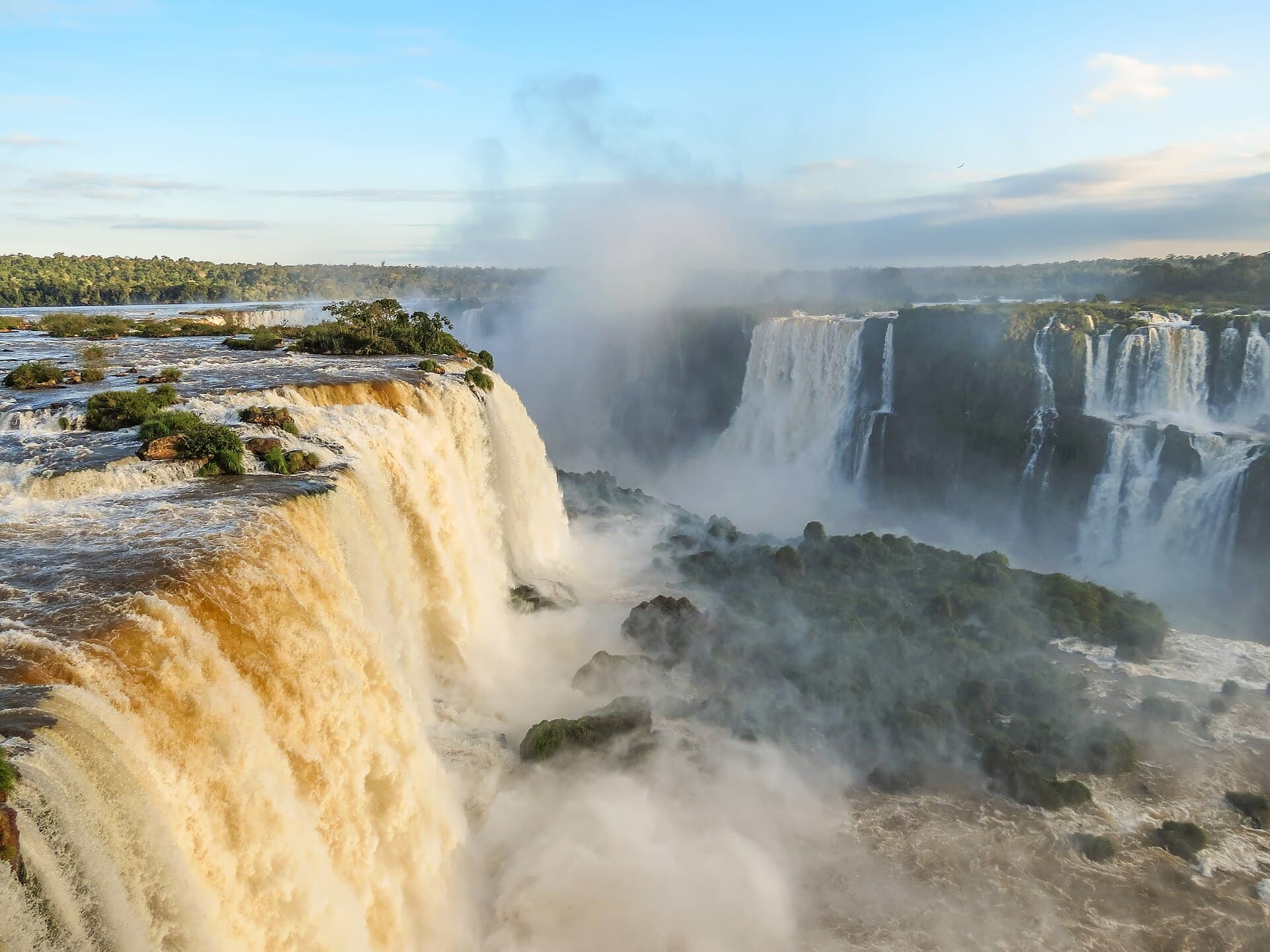
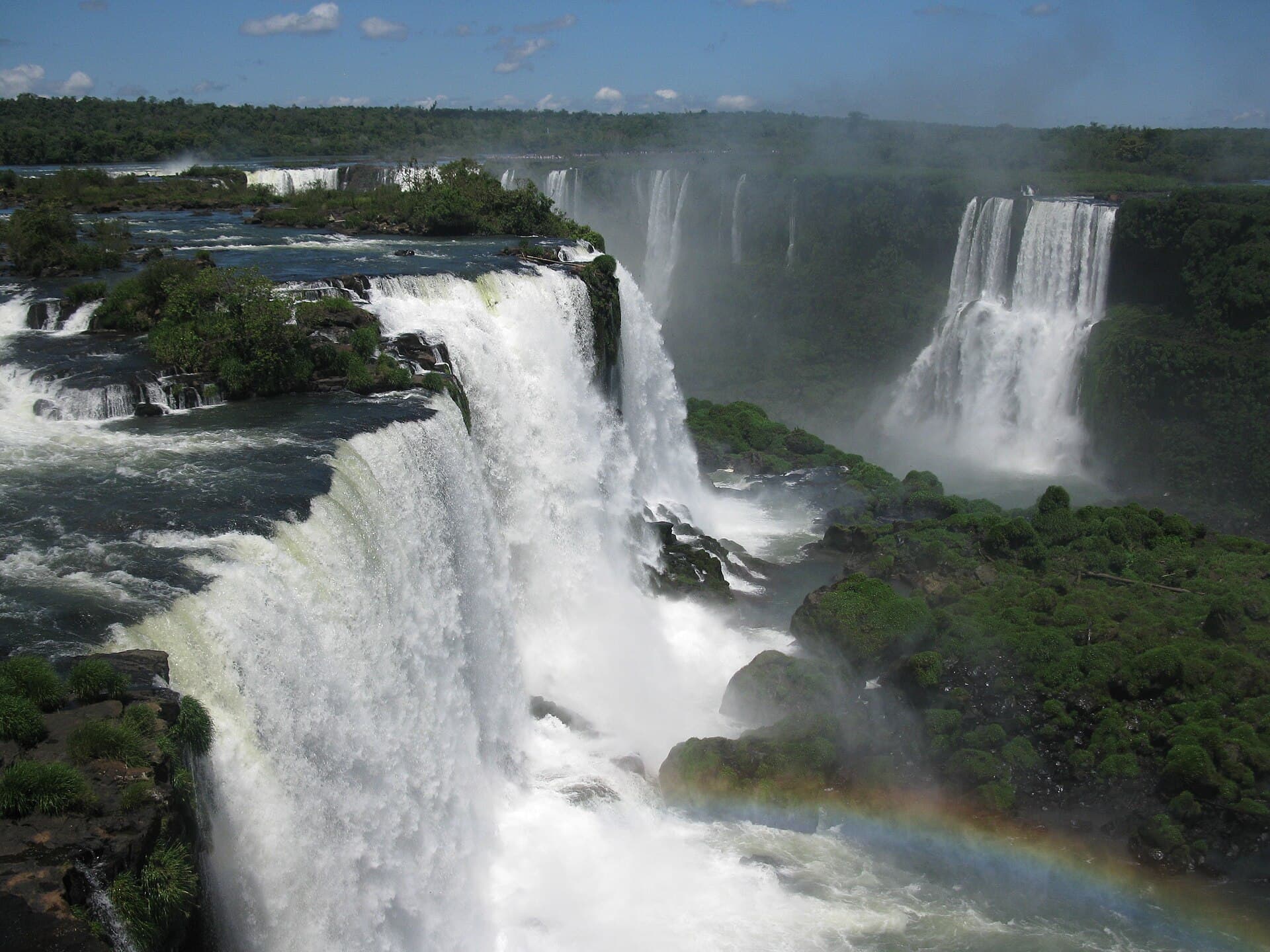
The __Iguazu Falls__ (UNESCO 1986, one of the world's greatest natural wonders, 275 cascades over 2.7 km, 1,500 m³/s flow), green Curitiba and the 42 beaches of Florianópolis island — the southern Brazilian nature, city and beach region.
Iguazu and Southern Brazil is a naturally and culturally surprisingly diverse region, extending from the Iguazu National Park (far west of Paraná) to Santa Catarina state and its mythical beaches. It's the most Europeanised region of Brazil — massive Italian, German, Polish and Ukrainian immigration in the 19th-20th centuries (Curitiba, Joinville, Blumenau), temperate climate (cool nights in austral winter), gastronomy marked by European traditions (wines, cheeses, charcuterie).
The Iguazu Falls are the region's absolute iconic attraction — one of the world's greatest natural wonders, UNESCO-listed in 1986. They form a set of 275 cascades extending over 2.7 km of falls front at the Brazil-Argentina border, with average flow of 1,500 m³/second (triple Niagara's). The highest fall, Garganta del Diablo ("Devil's Throat", 80 metres high, 700 m circumference horseshoe), is the spectacular climax — during rainy season, flow can reach 6,500 m³/s and create water mist visible kilometres away.
The Iguazu National Park divides into two sides. The Brazilian side (Parque Nacional do Iguaçu, created 1939, UNESCO 1986, 185,000 hectares, access via Foz do Iguaçu) offers the most spectacular panoramic view — 1.2 km landscaped walkway along the falls with footbridge reaching the base of the Garganta del Diablo (guaranteed shower). 4-6h visit, €25-35 entry + Macuco Safari (boat approaching the falls' base) €60-90. The Argentinian side (Parque Nacional Iguazú, created 1934, UNESCO 1984, 67,000 hectares, access via Puerto Iguazú) offers a more immersive experience — walkways directly above and beside the falls (3 circuits: Lower Circuit, Upper Circuit, Garganta del Diablo by train from Visitor Centre). 6-8h visit. Our recommendation: visit both sides over 2 days (1 day Brazil for panoramic view, 1 day Argentina for immersion).
Curitiba (1.9 million inhabitants, Paraná capital) is one of Brazil's cleanest and best-planned cities — global ecological urbanism model (BRT invented here, highest Brazilian green space per capita, exemplary recycling). It's also the departure of the legendary Serra Verde Express train that crosses the Serra do Mar to Morretes (3h30 vertiginous descent through Atlantic forest, 100 km, viaducts and tunnels, €60-100 per person return) — one of South America's most beautiful rail excursions.
Florianópolis (500,000 inhabitants, Santa Catarina capital, nicknamed "Floripa") is one of Brazil's most beautiful tropical islands — 54 km long by 18 km wide, 42 exceptional beaches, connected to the mainland by 3 bridges. It's the favourite beach destination of Argentinians and one of the world's surfing capitals (Praia da Joaquina). Iconic beaches: Praia Brava (young and festive), Praia Mole (surf and beach bars), Praia da Joaquina (international surf competitions), Praia do Campeche (wilder), Praia dos Ingleses (family), Lagoa da Conceição (central lagoon, nightlife).
The region also includes other hubs: Blumenau (Brazil's Germanic capital, 19th century German immigrants, Oktoberfest festival), Gramado (gaucho mountain serra, Swiss-European atmosphere, festivals), Bento Gonçalves (wine valley, Italian immigrants), Porto Alegre (Rio Grande do Sul capital, gaucho culture).
Explore Iguazu & South
Spots in the region
Situation
Où se situe Iguazu & South ?
Ouvrir la carte en grand sur OpenStreetMap →Frequently asked questions
Should you visit Iguazu Brazilian or Argentinian side?+
When is the best time for Iguazu?+
How many days for Iguazu?+
How to get to Iguazu?+
Florianópolis or Búzios: which Brazilian beach to choose?+
Our verdict
Iguazu and Southern Brazil is an unmissable natural and beach region for any 15+ day Brazilian trip — Iguazu Falls alone (UNESCO 1986) justify the detour, and the Iguazu + Florianópolis combination offers one of the country's best nature-beach balances. Our recommendation: plan 2 nights at Iguazu (1 day Brazil for panoramic view, 1 day Argentina for immersion — most complete formula) and 3-4 nights in Florianópolis (Lagoa da Conceição as base, exploring the 42 beaches by taste: Praia Mole for surf, Praia do Campeche for nature, Praia dos Ingleses for family). Optionally add 2 nights in Curitiba for the Serra Verde Express train to Morretes, or 2 nights at Gramado for the gaucho mountain dimension. Travel from April to October for optimal Iguazu climate and Florianópolis without crowds, or November-March for full beach atmosphere (but heat and crowds). Anticipate domestic flights (Rio-Foz do Iguaçu €100-200, Foz-Florianópolis €100-200). Budget €1,500-2,500/person for 7 days in the region all-inclusive (excluding international).