Northern Thailand goes through three distinct seasons, each with very different consequences for the traveller.
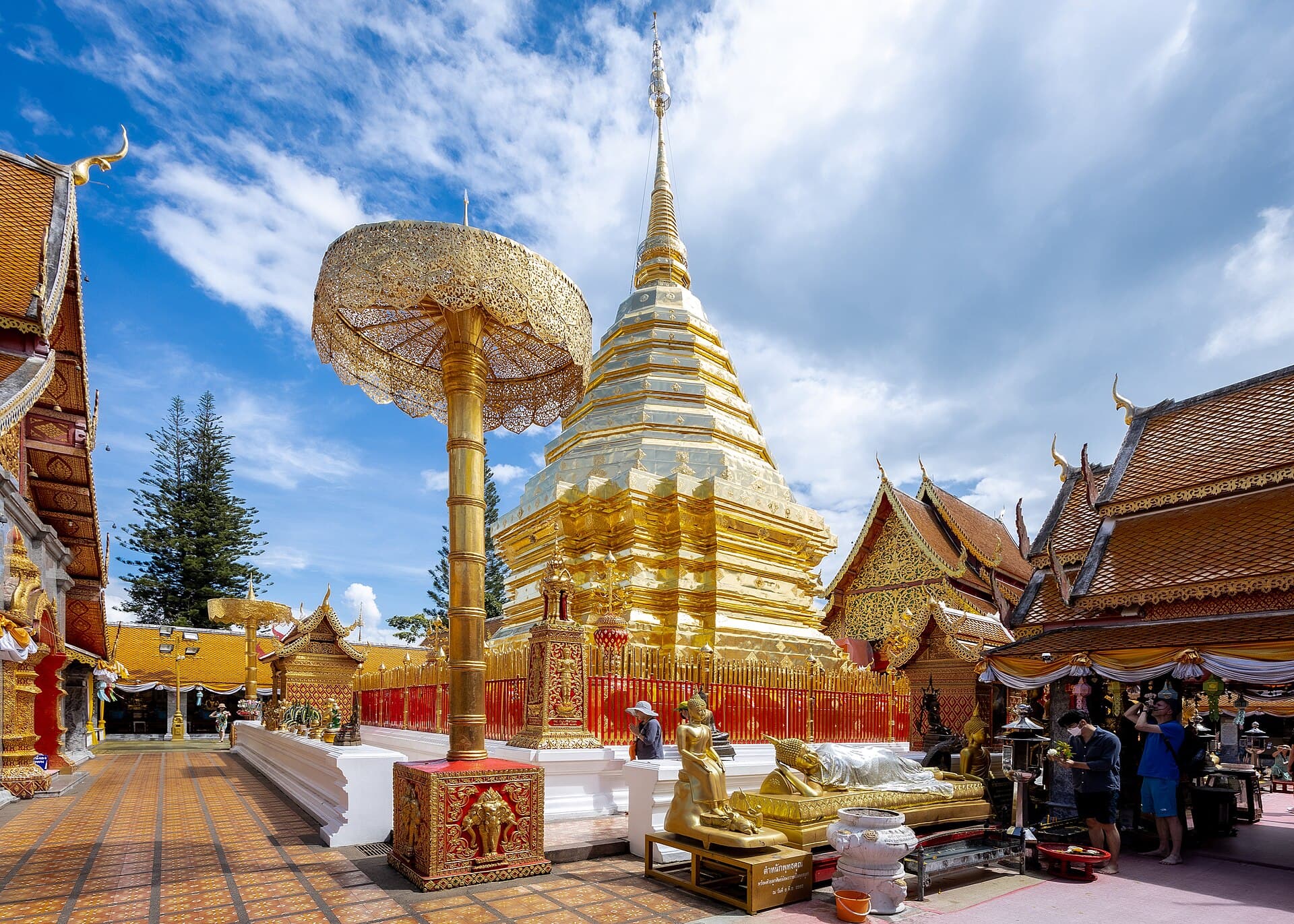
The cool, dry season (November to February) is the ideal window. In Bangkok, temperatures sit between 25 and 32 °C by day, with relatively cool, bearable nights. In Chiang Mai, the altitude (310 m) brings welcome respite: 15-20 °C at night, 28-30 °C by day, and the occasional dawn at Doi Suthep cool enough to justify a fleece. The air is clear, the temple visits unburdened by furnace heat. This is high season — book ahead, especially for Chiang Mai accommodation during the Yi Peng festival (November) and the Chiang Mai Flower Festival (February), when guesthouse availability inside the old city walls evaporates a full season in advance.
November is often singled out as the best month in the north: end of monsoon, first true coolness, the lantern festival that sends thousands of paper khom loi rising into the sky in a sequence of staged releases around Mae Jo. December-January is the peak of high season, with flawless weather but maximum crowds — expect to pay 30-50 percent more than shoulder rates and to share Wat Phra Singh with several busloads of fellow visitors. February offers a fine compromise: ideal conditions, fewer crowds than the year-end rush, and the city's flower festival in early February turning the moat into a kilometre of marigolds and orchids.
The hot season (March-May) pushes temperatures to extreme levels in Bangkok (38-40 °C in April). The city becomes punishing outside of air-conditioned spaces and lunchtime sightseeing is effectively impossible. Chiang Mai suffers a particularly severe air pollution problem from January to April, driven by agricultural burning in the surrounding regions and by similar burning across the Myanmar and Laotian borders: the air-quality index regularly reaches hazardous levels in March-April (AQI above 300 is routine), which counter-indicates outdoor activities, trekking and indeed extended walks in the old city. The Songkran festival (13-15 April) remains a unique experience worth planning a trip around — the most spectacular water festival in Asia, with Khao San Road and the Chiang Mai moat turning into kilometres of joyful, soaking street battle.
The monsoon season (June to October) brings daily showers to Bangkok and the north. Prices drop 30-40%, sites are less crowded, and the rice terraces around Pai and Mae Hong Son glow a vivid electric green. For lovers of lush landscapes and slower travel, July-August in the north is photographically superb despite the rain, which usually arrives as predictable late-afternoon downpours rather than all-day greyness. Our recommendation: aim for November or February for the best combination of weather, crowd levels and experiences, and treat March-April as a window to skip entirely unless you specifically want to witness Songkran.
Read also
- Bangkok, capital of the Land of Smiles — Golden temples, legendary street food and nightlife in Thailand's largest city.
- Chiang Mai, the Rose of the North — 300 temples, night markets and trekking in the hills around the northern capital.
- Thailand — complete country guide — Everything you need to know before you go: formalities, budget, regions, best time to visit.
- Southern Thailand — beaches and islands — Phuket, Krabi and the turquoise islands of the Andaman Sea and the Gulf of Thailand.