Region
Lombok & Gili Islands
Bali's wilder neighbour — a towering volcano, empty beaches and coral atolls with some of Indonesia's clearest water.
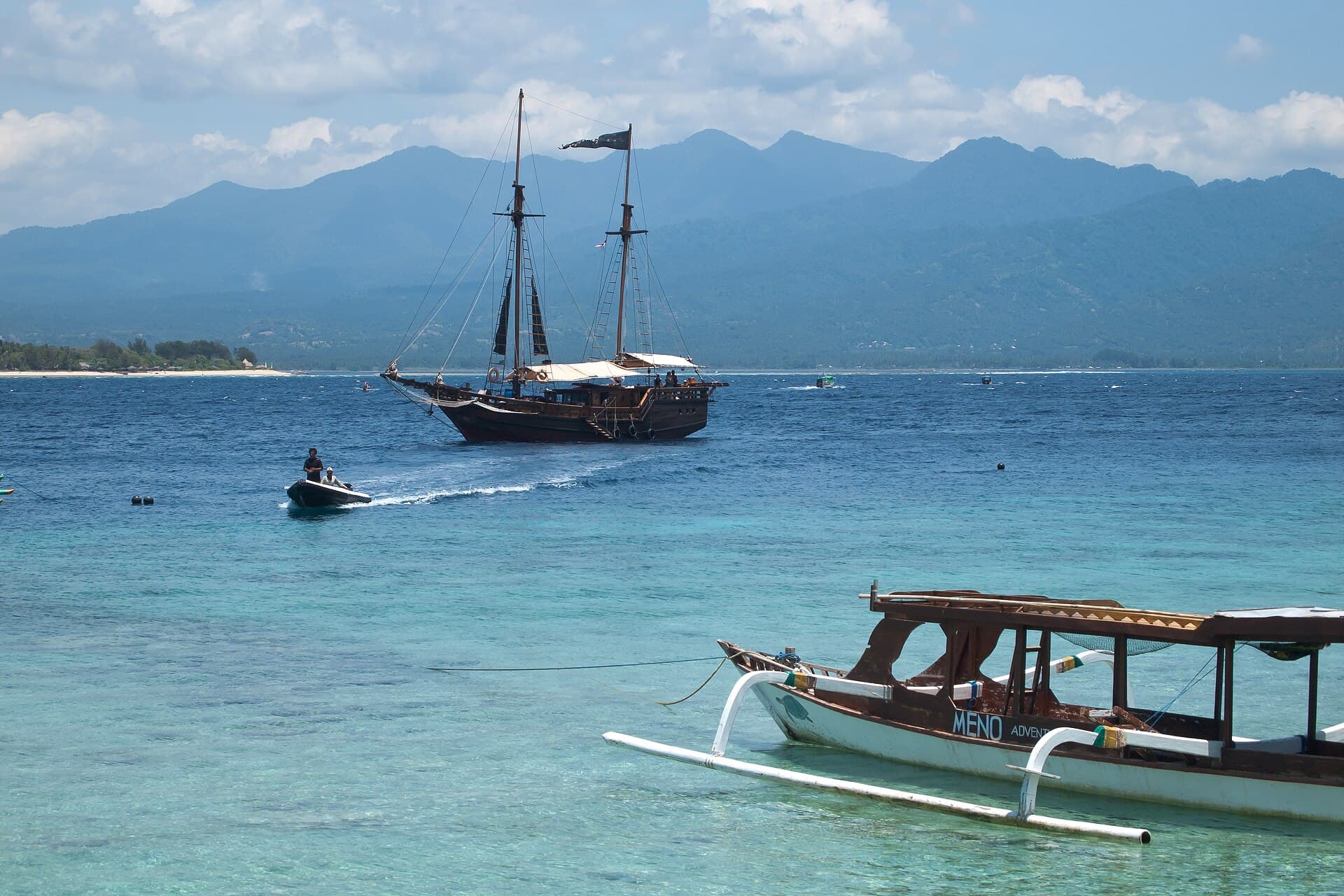
Lombok and the Gili Islands form a complementary pair of destinations, sitting just 35 km east of Bali and reachable by fast boat in 1h45 to 2h30. Lombok, the main island (4,725 km²), is dominated by Mount Rinjani (3,726 m), Indonesia's second-highest volcano and one of the great treks in Southeast Asia. Its southern shoreline holds some of the country's most beautiful beaches — Tanjung Aan, Mawun, Selong Belanak — largely untouched by the mass tourism that has reshaped Bali. The interior is a mix of dry savannah, terraced rice fields and traditional Sasak villages, where Islam, animism and centuries-old craft traditions still set the rhythm of daily life.
The Gili Islands — Gili Trawangan, Gili Meno and Gili Air — are three small coral atolls off Lombok's north-west coast. No motorised vehicles are allowed: you move by bike or by cidomo (horse cart), giving the islands a particular slow-travel charm. The water around them is among the clearest in Indonesia, with underwater visibility regularly above 20 metres, and the marine life is exceptional. Green and hawksbill sea turtles can be spotted from shore while snorkelling — no boat trip required — and the dive sites count among the best entry-level diving in Asia. Taken together, Lombok and the Gili Islands deliver the perfect counterpoint to Bali: less polish, more pure nature, and time to breathe.
Situation
Où se situe Lombok & Gili Islands ?
Ouvrir la carte en grand sur OpenStreetMap →Frequently asked questions
How do you get from Bali to Lombok and the Gili Islands?+
Which Gili island should I choose — Trawangan, Meno or Air?+
Can I trek Rinjani without a guide?+
When is the best time to visit Lombok and the Gili Islands?+
Can you really see sea turtles in the Gilis?+
Is there a risk of earthquakes in Lombok and the Gilis?+
Our verdict
Lombok and the Gili Islands are the natural complement to Bali, and arguably its better half for travellers who put nature, pristine beaches and serious diving at the top of their list. The winning formula for a ten-day stay is straightforward: two or three days on the Gilis for snorkelling and diving, two days on the wild beaches of southern Lombok, and two or three days trekking Rinjani if your fitness and the calendar allow. It is the kind of itinerary that turns a Bali trip into something more substantial — and many travellers who arrive expecting a quick weekend extension end up extending the Lombok leg at the expense of Bali.
The season window is tight: aim for May to September for the best conditions across the region. May, June and September are the sweet spots — dry weather, clear water, manageable crowds. July and August deliver perfect conditions but with peak prices and full boats. The wet season (October to April) is more disruptive here than in Bali: sea crossings can be cancelled and the Rinjani trek closes from December through March. Plan accordingly, book guides and fast boats well ahead in high season, and treat Lombok and the Gili Islands as a region that deserves its own pace — not a quick add-on to a Bali itinerary.