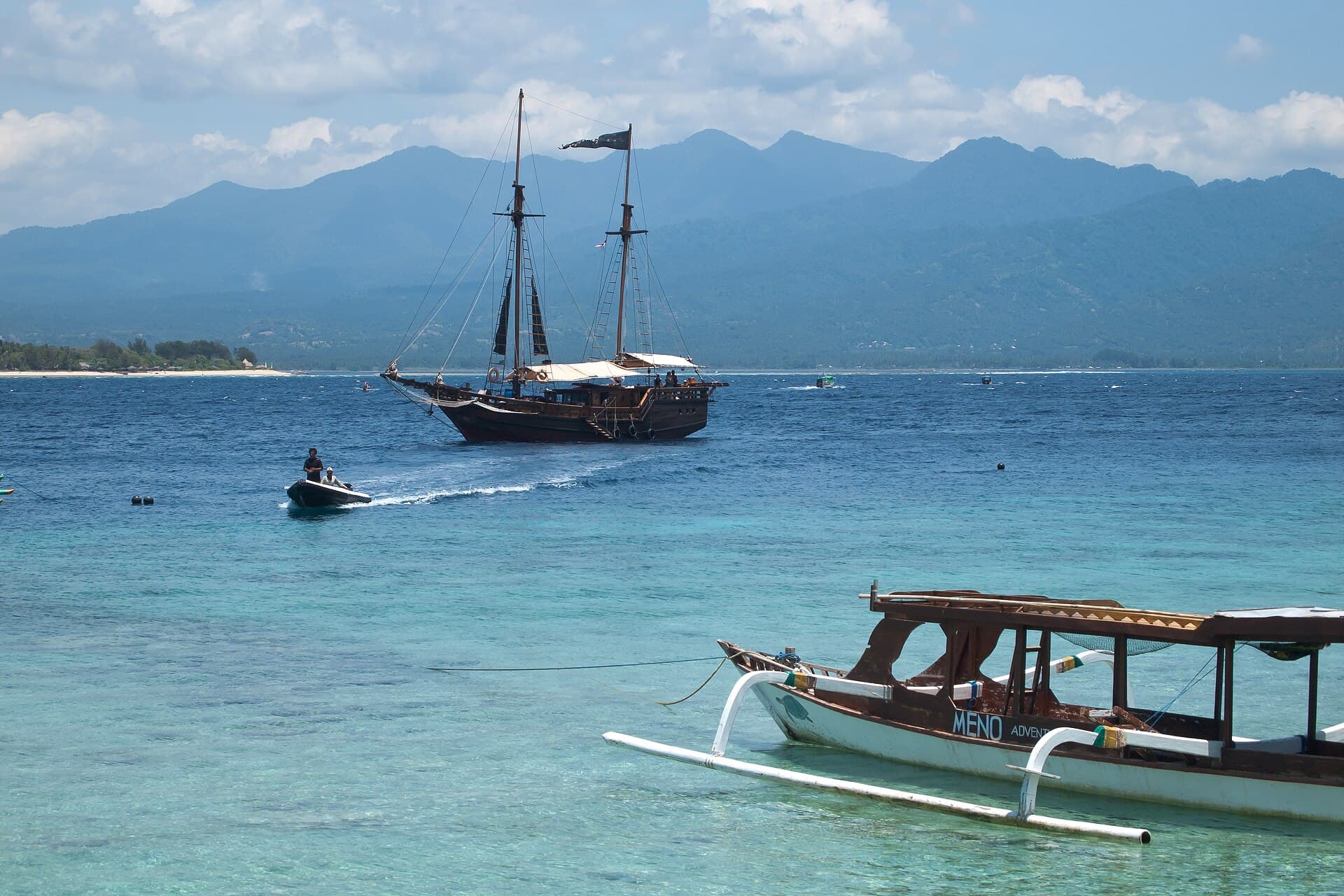
The climate in Lombok and the Gili Islands is tropical with a more pronounced dry-wet split than Bali. The optimal window runs from May to September, with peak crowds in July and August.
The dry season (May-September) is unquestionably the best time to visit. Seas are calm, underwater visibility is excellent (often 20-25 m), trails on Rinjani are dry, and the southern Lombok beaches sit in near-constant sunshine. Water temperature holds at 28-29 °C and currents are predictable, making dive operations smooth. July and August are peak season — Gili Trawangan fills up, prices climb 20-30%, and fast boats from Bali are often booked out. Plan accordingly: book guides, boats and accommodation weeks in advance.
May and June are the most strongly recommended months: perfect weather, calm sea, manageable crowds and shoulder-season pricing. September is equally strong — the end of the high season clears the Gilis of summer crowds while the weather still cooperates. The wet season (October to April) is more disruptive here than on Bali. Fast boats from Bali can be cancelled in bad weather, the south Lombok beaches catch heavy swell, and the Rinjani trek is officially closed from December through March because of dangerous trail conditions. October is a transition month that often holds up well. November and December mark the entry into the monsoon and are not recommended for a first visit. If you must travel out of season, base on the Gilis rather than venturing into the highlands, and check the weather daily before any boat crossing.
A specific note on the Rinjani trek: the national park's official open season runs from May to November, with a December-to-March closure. June, July and August give the best summit views (Bali and Sumbawa visible from the 3,726 m peak), but require booking guides and porters several weeks ahead in summer. September is often the ideal compromise — dry trails, clear skies and smaller groups.
Read also
- Gili Trawangan, the jewel of the Gilis — Sea turtles, crystal-clear diving and a festive vibe on the car-free coral atoll.
- Lombok, the wild island — Mount Rinjani, empty southern beaches and Sasak culture far from the Bali crowds.
- Bali — The Island of the Gods, 35 km to the west: culture, surf and temples at sunset.
- Indonesia — Complete guide to the archipelago: visa, best season and unmissable islands.